
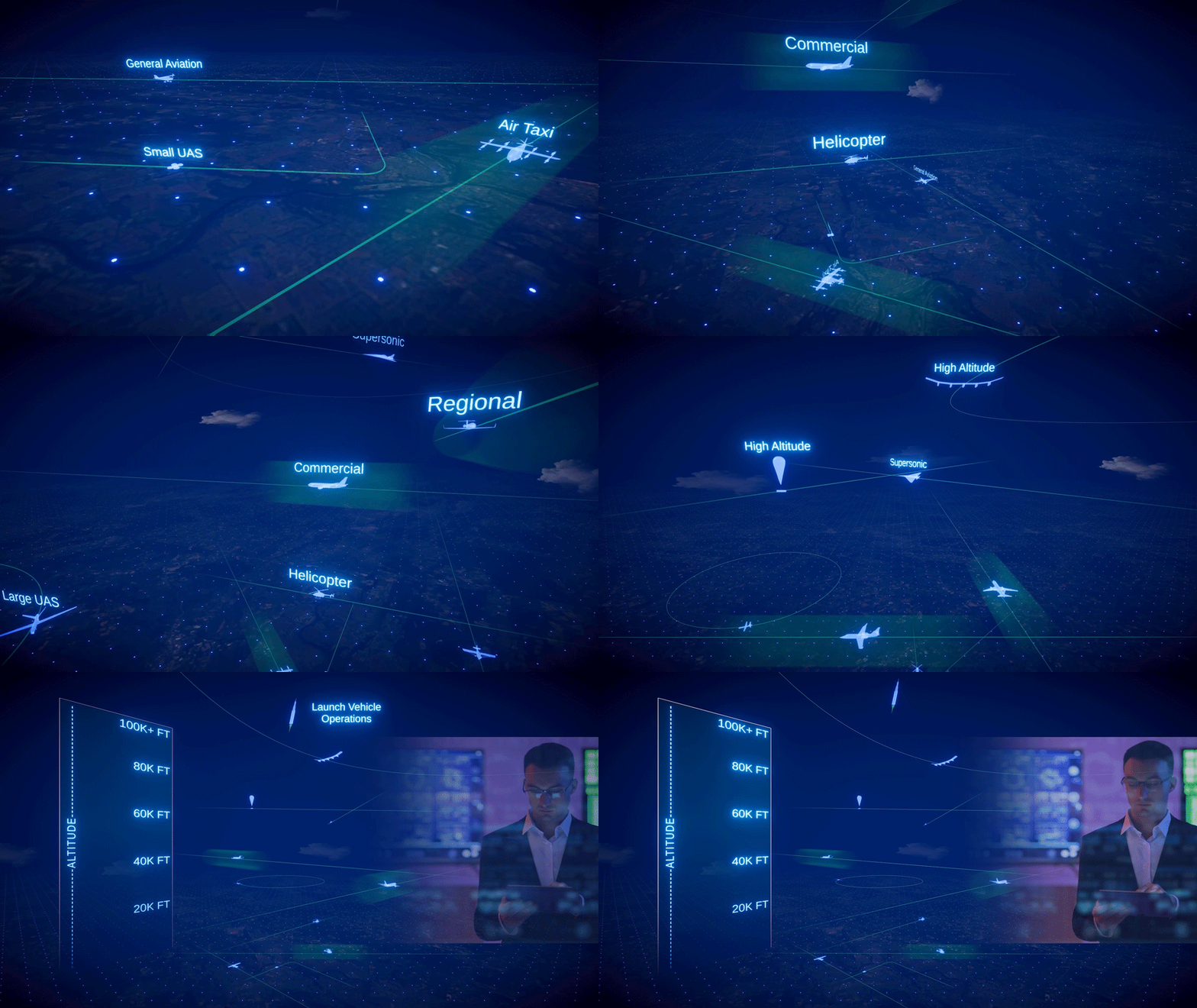
Learn about the ATMS project and its objectives to enhance air traffic management, safety, and efficiency in the National Airspace System.
Overview of ATMS and Its Objectives
The Air Traffic Management and Safety (ATMS) project aims to redefine air traffic management by transitioning from a reactive, tactical approach to a proactive, strategic one. This paradigm shift is critical for maintaining safety, efficiency, and resilience in the increasingly complex and diverse National Airspace System (NAS).
Strategic Harmonization for Integrated Flows and Trajectories
### Evolution of the National Airspace System
The NAS is undergoing a transformation, driven by an increase in air traffic and the integration of new aircraft types. Current tactical management methods are reaching their limits in terms of scalability, efficiency, and predictability. ATMS focuses on developing strategic tools and technologies to harmonize and optimize the movement of air vehicles, ensuring that the airspace can handle the growing demand.
### Proactive Traffic Management
By moving from a reactive to a proactive approach, ATMS research aims to manage traffic flows and trajectories more effectively. This strategic management will enhance safety and efficiency, allowing for better planning and less congestion in the airspace.
Safely Enabling Routine Autonomous Operations
### Addressing Critical Gaps
Advancements in autonomous operations can significantly reduce human workload and mitigate safety risks. However, several critical gaps remain, particularly in hazard perception and avoidance, seamless ATC integration, and robust flight procedures. These gaps pose significant challenges to the widespread adoption of autonomous operations in the aviation sector.
### Targeted Research and Development
ATMS is conducting targeted research to fill these gaps, ensuring that autonomous taxi, approach, and landing operations can be integrated safely and efficiently with traditional aviation operations. This research is crucial for enhancing operational safety and fostering innovation in the field of advanced air mobility.
Assurance Methods for Aircraft Automation
### Balancing Trust and Evidence
The aviation industry is increasingly adopting automation technologies, but ensuring their safe and effective deployment requires a robust framework. ATMS is working to define clear safety objectives and traceable methods to validate these technologies. This involves integrating design and operational assurance processes to ensure that requirements flow down to all levels of development and operation, generating traceable evidence and operational outcomes.
### Stakeholder Benefits
By delivering practical solutions, ATMS is enhancing the safety and efficiency of air travel for all stakeholders, including air traffic controllers, pilots, passengers, and operators. These solutions are essential for maintaining the United States' position as the world leader in aviation safety and innovation.
Through these focused efforts, ATMS is paving the way for a safer, more efficient, and more resilient National Airspace System, ensuring that America's skies remain the safest and most efficient in the world.
Source: Read Original Article
Post a Comment