
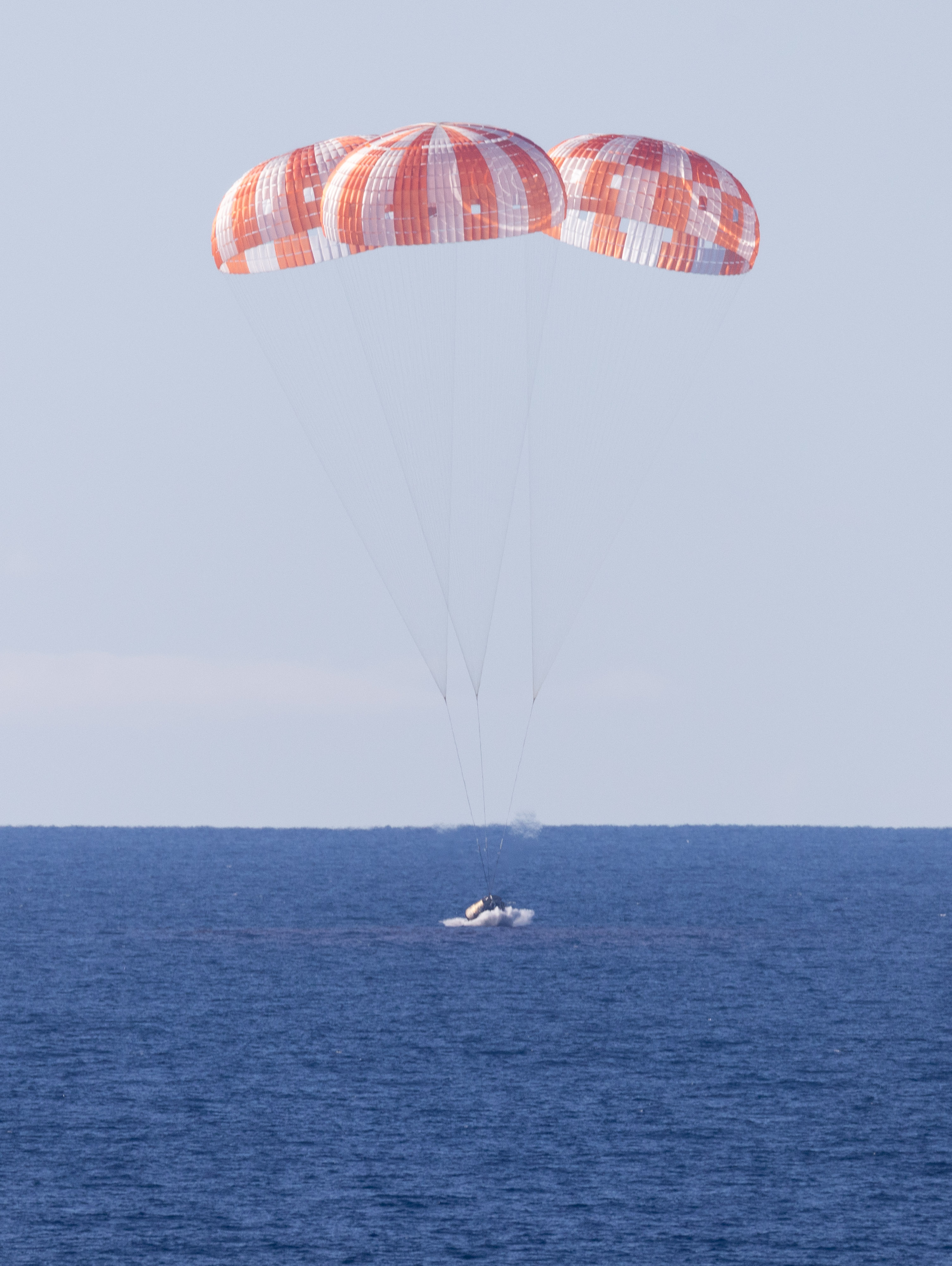
NASA's Artemis II mission saw four astronauts set a new distance record of 694,481 miles before splashing down in the Pacific Ocean on April 10, 2026.
Mission Overview
NASA's Artemis II mission marked a historic milestone, as four astronauts—Reid Wiseman, Victor Glover, Christina Koch, and Jeremy Hansen—completed a 10-day journey around the Moon and returned to Earth. The spacecraft splashed down at 5:07 p.m. PDT on April 10, 2026, in the Pacific Ocean off California's coast.
Mission Highlights
The mission saw astronauts travel 252,756 miles from Earth, surpassing Apollo 13's previous record by over 34,000 miles. This lunar flyby set a new distance record for human spaceflight. Over their journey, the crew collectively traveled 694,481 miles.
Launch and Initial Operations
On April 1, NASA launched the Artemis II mission from Kennedy Space Center's Pad 39B aboard the Space Launch System (SLS) rocket. The American-built SLS rocket generated 8.8 million pounds of thrust at liftoff, propelling the Orion spacecraft into space with pinpoint accuracy. During their first day in orbit, the astronauts and ground teams conducted a thorough check of all systems.
Lunar Flyby and Scientific Investigations
The crew conducted several scientific investigations to aid future lunar missions. They evaluated life support systems and performed piloting demonstrations to refine rendezvous and docking procedures for future landers. Additionally, they documented lunar surface features using over 7,000 images, including striking views of Earth from the Moon's perspective.
Return and Medical Evaluation
Following splashdown, a joint NASA-U.S. military team assisted the astronauts out of the spacecraft in open water and transported them to the USS John P. Murtha for medical evaluation. The crew members are expected to return to Houston on April 11, where further analysis will continue their research.
Mission Significance
NASA Administrator Jared Isaacman praised the crew's historic achievement and acknowledged the contributions of the entire NASA workforce and international partners. Associate Administrator Amit Kshatriya highlighted the success of the vehicle and team as well as the Artemis program's broader goals to return humanity to the lunar surface and beyond.
Overview of the Artemis Program
The successful return of the Artemis crew to Earth marks a significant milestone in NASA's mission to explore the Moon and beyond. This mission has provided valuable insights into the challenges and opportunities associated with lunar exploration, setting the stage for future endeavors.
Mission Objectives and Outcomes
NASA's Artemis program aims to establish an enduring human presence on the Moon while paving the way for more ambitious space exploration, including a manned mission to Mars. The recent successful landing has demonstrated advancements in mission operations and astronaut training, emphasizing the importance of well-informed judgment and scientific curiosity.
Future Missions and Partnerships
With the Artemis crew safely back on Earth, attention now shifts towards preparing for the upcoming Artemis III mission scheduled for next year. This mission will test integrated operations with commercially built Moon landers in low Earth orbit, marking a significant step toward achieving the program's broader goals.
Scientific Discovery and Economic Benefits
The Artemis program is not only about exploration; it also seeks to foster scientific discovery and drive economic growth through innovation. By sending astronauts on increasingly challenging missions, NASA aims to uncover new insights into lunar geology and climate, as well as develop technologies that can support long-term human habitation.
Conclusion
As NASA embarks on the next phase of its Artemis program, the focus remains on leveraging cutting-edge technology and international cooperation to achieve its ambitious goals. Visit [NASA's official website](https://www.nasa.gov/artemis) for more detailed information about upcoming missions and achievements in space exploration.
Source: Read Original Article
Post a Comment