
Inertia Enterprises partners with Lawrence Livermore National Laboratory to advance laser-based fusion technology and license key patents, boosting efforts
Fusion Power Startup Inertia Enterprises Expands Partnerships with Lawrence Livermore National Laboratory
Fusion power startup Inertia Enterprises announced on Tuesday that it has entered into three key agreements with the renowned Lawrence Livermore National Laboratory (LLNL). These collaborations are expected to propel Inertia ahead of its competitors in advancing laser-based fusion technology, a significant milestone for the industry.
Strategic Alliance and Patents Transfer
The deals encompass two strategic partnership projects and one cooperative research and development agreement. Under these terms, Inertia is licensing nearly 200 patents from LLNL, a move that could significantly enhance Inertia’s technological edge in developing commercial-scale fusion reactors. The organizations plan to collaborate on advancing laser technology and improving fuel targets, aiming for enhanced performance and efficient manufacturing processes.
Pioneering Inertial Confinement Fusion
Inertia Enterprises burst onto the scene in February with a $450 million Series A funding round, positioning it among the best-funded startups in the sector. The company is focusing on inertial confinement fusion (ICF), which uses powerful laser beams to compress a fuel pellet, as opposed to magnetic confinement methods used by other startups like Xcimer and Focused Energy.
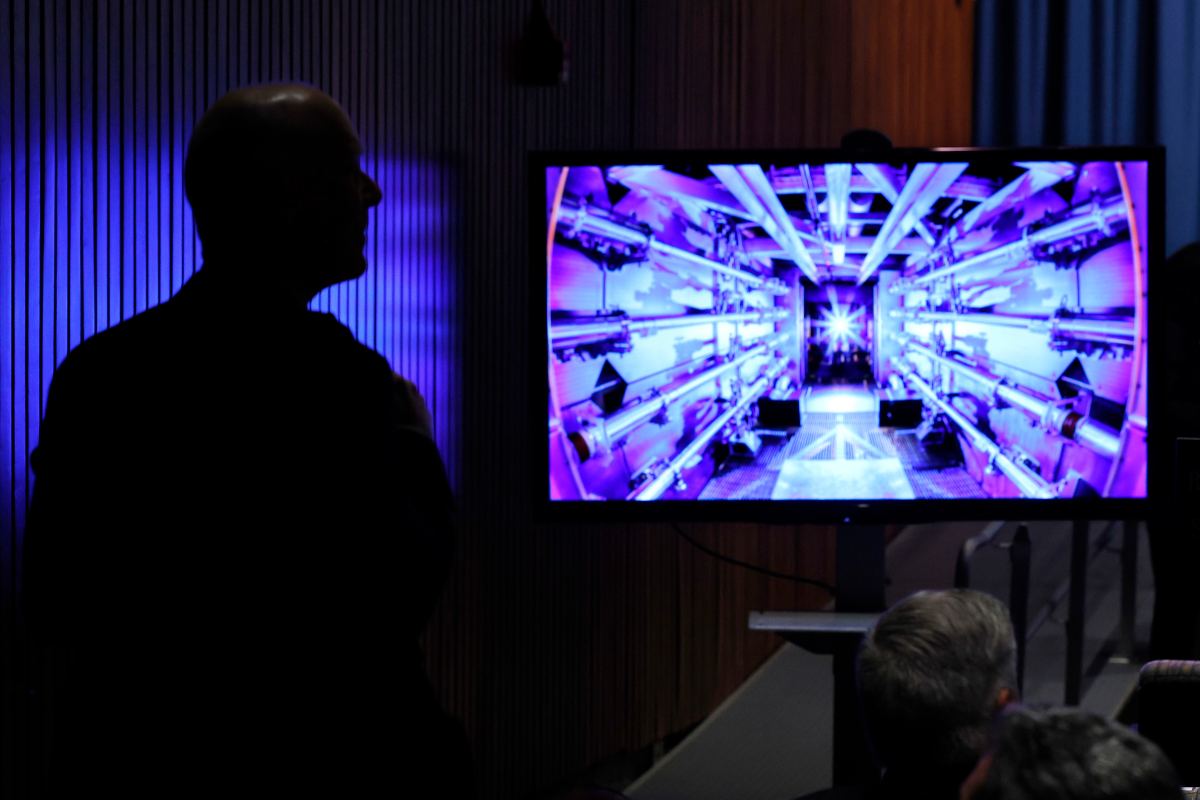
At LLNL’s National Ignition Facility (NIF), 192 laser beams are directed into a large vacuum chamber, converging on a small gold cylinder known as a hohlraum. Inside the hohlraum is a diamond-coated fuel pellet. When hit by the lasers, the hohlraum vaporizes and emits X-rays that blast the BB-sized fuel pellet, initiating a compression process in which the deuterium-tritium fusion occurs.
Historical Context and Technological Advancements
The concept of laser-driven fusion was first theorized in the 1960s as a safer alternative for researching thermonuclear weapons. After two decades of development, construction on NIF began in 1997. It took another 25 years to achieve breakeven conditions where a fusion reaction releases more energy than needed to initiate it.
Several startups are now working to commercialize this technology. Inertia and its peers hope that advancements in laser technology will make the process more efficient, reducing the energy required for each reaction and making commercial-scale power plants economically viable.
Forward-Looking Initiatives
The agreements between Inertia and LLNL are expected to accelerate progress in developing advanced lasers and refining fuel targets. Annie Kritcher, co-founder and chief scientist of Inertia, was instrumental in designing the NIF experiment that achieved scientific breakeven conditions. Her background at LLNL has been pivotal in shaping this strategic partnership.
TechCrunch Disrupt 2026, taking place in San Francisco, offers an opportunity for founders, investors, and tech leaders to connect and explore groundbreaking innovations across various sectors. For those interested in attending or participating, registration is now open with early bird savings available until a specific date.
Source: Read Original Article
Post a Comment