
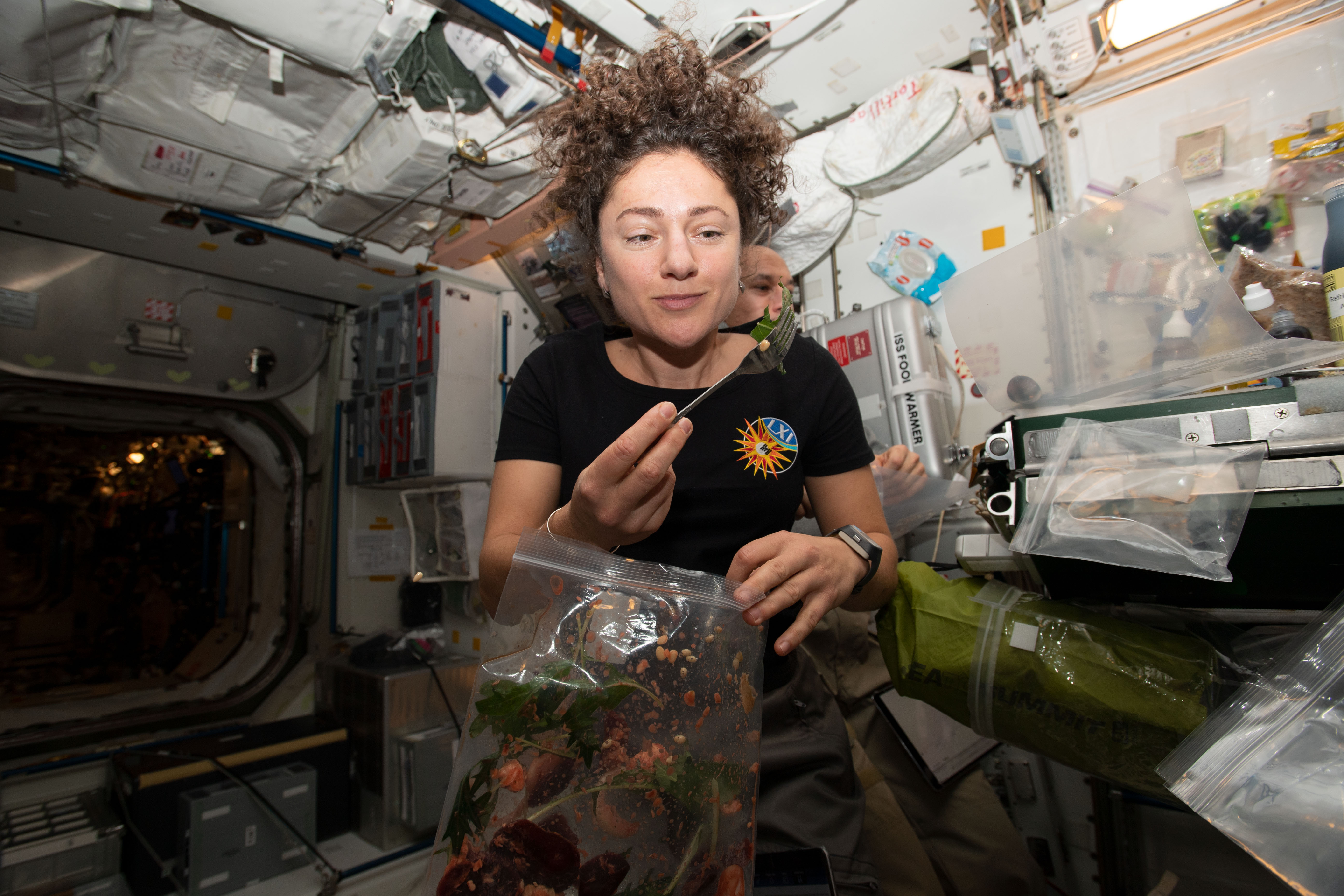
Explore the nutritional challenges of deep space missions, focusing on plant cultivation and algae growth like alfalfa and spirulina. Essential for sustain
Nutritional Challenges for Deep Space Missions
No matter how far humanity aims to travel or how ambitious the mission, nutrition plays a key role. Before embarking on long-term stays on the Moon, Mars, and beyond, humans must learn to grow and care for plants and other sources of nutrition like algae to keep explorers fed.
Studying Plant-Microbe Interactions
### Alfalfa Plants in Space
NASA’s Veg-06 study focuses on alfalfa (Medicago sativa), a model organism. The investigation aims to determine how the plant interacts with nitrogen-fixing bacteria in space, which can convert atmospheric nitrogen into a form usable by plants. Additionally, this experiment examines the effects of reduced lignin content, which could enable more efficient recycling of plant parts for future generations.
Cultivating Algae Efficiently
### Spirulina Growth Experiments
Other forms of nutrition that support crew health include spirulina (Arthorospira), a type of algae rich in protein, B vitamins, and antioxidants. The Space Surface Spirulina experiment from the Japan Aerospace Exploration Agency tests a thin-film method for growing this high-protein food, aiming to conserve water and produce fresh oxygen aboard spacecraft.
Seed Studies for Better Plants
### European Space Agency's Seed Vigour Study
The European Space Agency’s (ESA) Seed Vigour investigation exposes seeds from various plant species to spaceflight conditions. This builds on a 2015 study where arugula seeds spent six months in orbit, returning data that suggested the seeds took longer to sprout and showed signs of partial aging but did not compromise seed survival or seedling development.
### Canadian Space Agency's Tomatosphere 9
The Canadian Space Agency’s (CSA) Tomatosphere 9 investigation exposes 1.8 million tomato seeds to microgravity conditions aboard the International Space Station. After returning to Earth, these seeds will be distributed to schools across North America for a blind study comparing results with ground controls.
Research Aims to Inform Future Missions
Together, these studies aboard the space station deepen researchers’ understanding of nutrition in space and inform ways to better grow and maintain food sources that will keep crews healthy on future missions. These investigations are crucial steps toward ensuring sustainable food systems for long-duration space exploration.
Source: Read Original Article
Post a Comment