
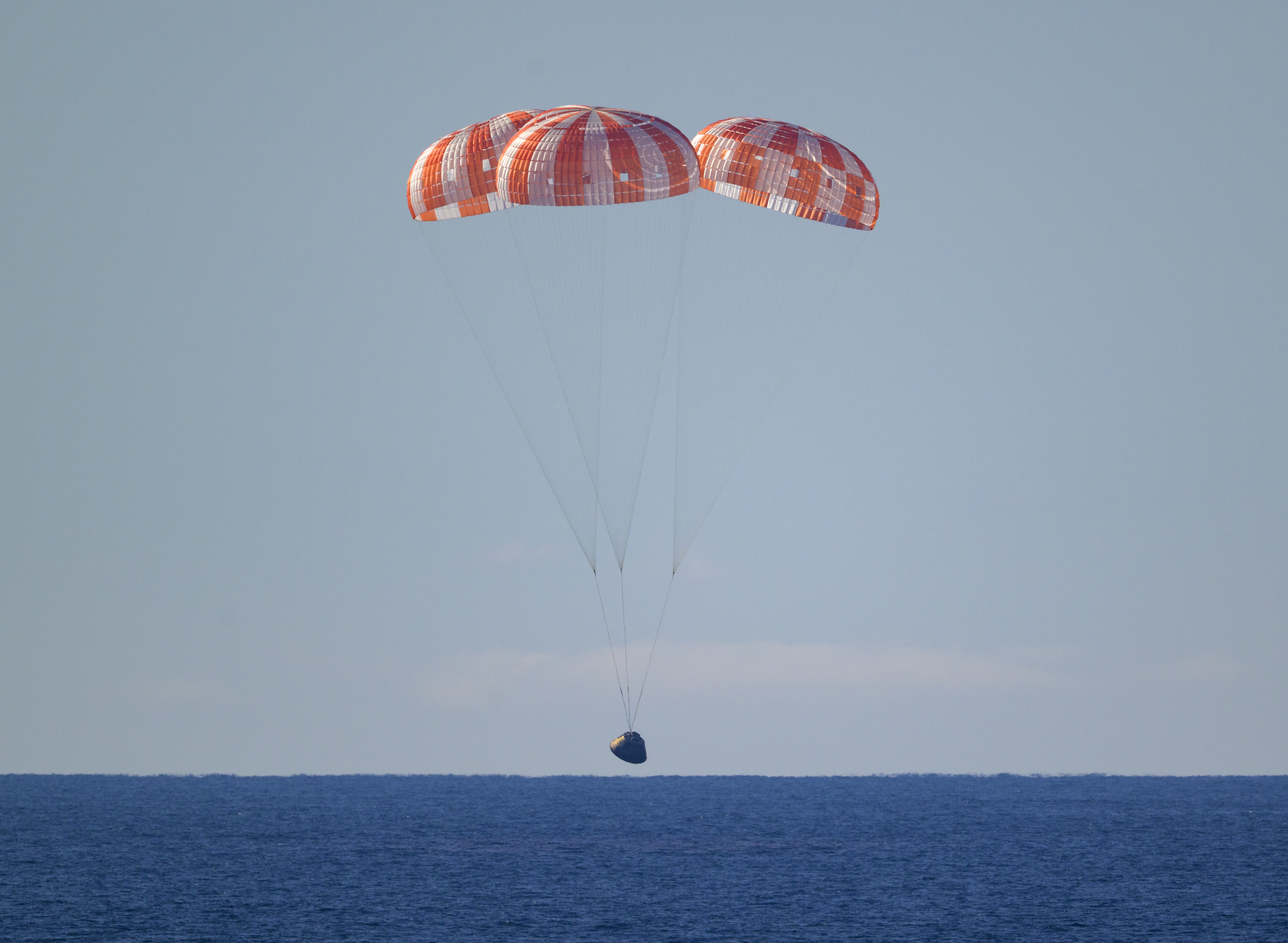
NASA's Orion spacecraft completed its historic Artemis II mission with a safe splashdown, breaking Apollo 13 records and providing crucial data for future
Mission Overview: Artemis II
The successful splashdown of NASA's Orion spacecraft on April 10, 2026, marked a significant milestone in human space exploration. After nearly ten days in orbit, the craft safely descended into the Pacific Ocean, completing its historic mission under the Artemis program.
Record-Breaking Spaceflight
During the Artemis II mission, the crew surpassed the Apollo 13 record for the farthest crewed spaceflight by traveling beyond lunar orbit. The mission provided valuable data and insights that will inform future deep-space missions.
Historical Significance: Exploring the Moon's Far Side
The crew captured unprecedented views of the moon's far side, a critical step in expanding humanity's understanding of Earth’s natural satellite. These images and data will support scientific research and could offer new opportunities for resource utilization on the moon.
Future Missions: Building to Mars
Artemis II serves as a significant stepping stone toward more ambitious missions under Artemis. The program aims to send astronauts to explore uncharted regions of the lunar surface, establish sustainable operations, and lay the groundwork for future crewed missions to Mars.
Multimedia Gallery
For additional images and detailed information about the mission, visit [NASA's multimedia page](https://www.nasa.gov/artemis-ii-multimedia/). Explore the full scope of this historic endeavor that pushes the boundaries of human space exploration.
Source: Read Original Article
Post a Comment