
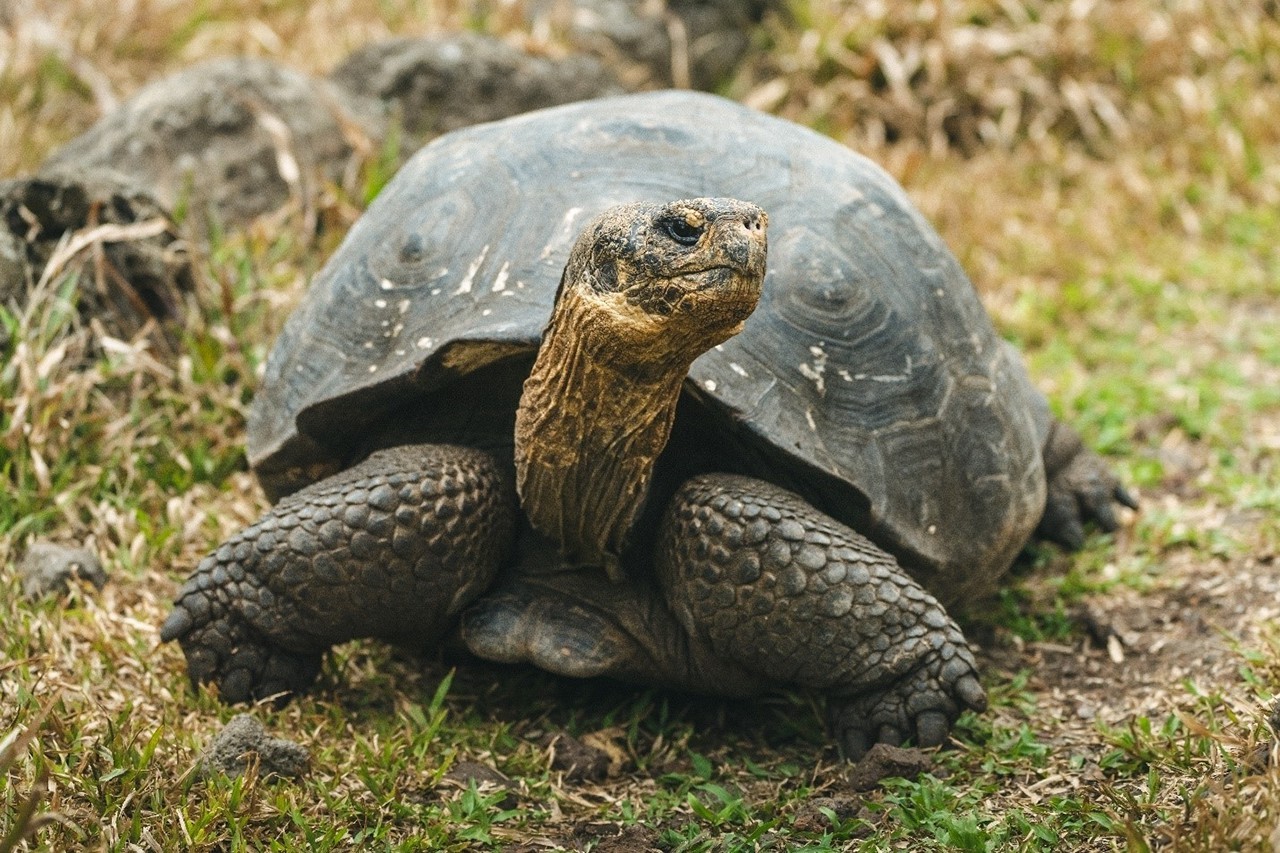
Giant tortoises, absent from Floreana Island in the Galápagos for over a century and a half, are being reintroduced following NASA satellite data analysis that aids scientists in identifying suitable habitats offering food, water, and nesting sites. The collaboration between the Galápagos National Park Directorate and Galápagos Conservancy signifies a significant milestone towards restoring tortoise populations within one of Earth's most distinctive archipelagos.
Floreana Island witnessed the extinction of its native tortoises in the mid-1800s due to overhunting by whalers and introduction of invasive species like pigs and rats that preyed on eggs and hatchlings. In their absence, the island underwent significant alterations. Across the Galápagos, giant tortoises historically played a crucial role in shaping landscapes through grazing vegetation, opening pathways, and disseminating seeds across islands.
Keith Gaddis, manager for NASA Earth Action’s Biological Diversity and Ecological Forecasting program at NASA Headquarters in Washington, stated, "This is exactly the kind of project where NASA Earth observations make a difference. We're helping partners answer a practical question: Where will these animals have the best chance to survive – not just today, but decades from now?"
On February 20th, 2021, the Galápagos National Park Directorate and its conservation partners released 158 giant tortoises at two sites on Floreana Island. James Gibbs, Vice President of Science and Conservation for the Galápagos Conservancy and a co-principal investigator of the project, noted, "It's a huge deal to have these tortoises back on this island. Charles Darwin was one of the last people to see them there."
In 2000, scientists made an unexpected discovery of unusual tortoises that could potentially be descendants of Floreana Island's native species, offering hope for their reintroduction.
In a groundbreaking discovery, unique giant tortoises found on Northern Isabela Island's Wolf Volcano, the highest peak in the Galápagos archipelago, were determined not to resemble any known living species. Approximately ten years later, DNA extracted from the bones of extinct Floreana tortoises discovered in caves on the island and museum collections revealed these tortoises possessed Floreana ancestry. This finding initiated a breeding program that has since produced hundreds of offspring anticipated to repopulate the original island.
Researchers hypothesized that whalers, who were active in the region over a century ago, may have transported tortoises between the islands. The Galápagos National Park Directorate has released over 10,000 tortoises across the archipelago over the past six decades, making it one of the most significant rewilding efforts ever undertaken. However, each island presents its unique challenges, as some regions within the Galápagos harbor distinct climate zones, ranging from cool and damp with evergreen vegetation to dry areas where green growth only appears after rainfall.
When these zones occur on the same island, tortoises move between them, with some animals traveling miles annually between seasonal feeding and nesting sites. "It's challenging for the tortoises because they are released from captivity into this environment," stated Gibbs. "They don't know where food is, where water is, or where to nest. If you can place them in conditions that are already favorable, you significantly increase their chances of survival."
The Floreana Island segment showcased in the Galápagos is undergoing restoration efforts aimed at preparing the landscape for the return of giant tortoises. To aid these efforts, NASA satellite data is employed to map environmental conditions across the islands and monitor shifts in vegetation, moisture, and temperature over time, providing crucial insights into where tortoises can find sustenance and water. Utilizing these records, scientists are better equipped to identify suitable locations for releasing rehabilitated tortoises.
International News: Galápagos National Park Utilizes Advanced Decision Tool for Giant Tortoise Conservation
A team led by Principal Investigator Giorgos Mountrakis of the State University of New York College of Environmental Science and Forestry, in collaboration with Gibbs, has developed a decision tool to guide the reintroduction of giant tortoises across the Galápagos archipelago. The innovative tool incorporates satellite data on habitat and climate conditions alongside millions of field observations of tortoise locations to determine optimal release sites and timings.
Christian Sevilla, Director of Ecosystems at the Galápagos National Park Directorate, highlighted the importance of such tools: "Habitat suitability models and environmental mapping are essential for integrating climate, topography, and vegetation data into evidence-based decisions, shifting from intuition to precision."
The map showcases modeled giant tortoise habitat suitability across the Galápagos under current conditions, with colors ranging from low to high, indicative of increased availability of food, moisture, and nesting sites. The decision tool leverages data from multiple NASA and partner satellite missions, including Landsat, European Sentinel satellites for vegetation tracking, Global Precipitation Measurement mission for rainfall data, Terra satellite for land-surface temperature estimation, and commercial satellite images for evaluating potential release sites prior to field surveys.
With a focus on understanding tortoise-environment relationships, the team can map habitat suitability today and forecast how it may evolve over time as environmental conditions change. According to Mountrakis, "The forecasting part is critical; this isn't a one-year project. We're looking at where tortoises will succeed 20, 40 years from now."
This initiative forms part of the broader Floreana Ecological Restoration Project, which seeks to eradicate invasive species like rats and feral cats across the islands. The giant tortoise release is a significant step forward in the preservation of these unique creatures and their ecosystems, as they can live over a century, making future habitat conditions crucial for their long-term survival.
Galápagos Conservancy Initiates Ecological Restoration on Floreana Island
The Galápagos Conservancy, in collaboration with NASA, has begun a project to reintroduce 12 native animal species onto Florean Island, with the focus being on tortoises as key contributors to ecosystem recovery. The Landsat 8 image from October 6, 2020, depicts dry coastal lowlands surrounding more verdant vegetation toward the island's center (Wanmei Liang/NASA Earth Observatory).
The Conservancy is leveraging NASA satellite data and a decision-making tool to facilitate tortoise releases on various Galápagos islands and strategize future reintroductions across the archipelago. The aim is for Floreana Island to once again host a substantial tortoise population, thereby reestablishing symbiotic relationships between animals, plants, and the landscape that have defined the island for millennia.
"For those of us residing and working in Galápagos, this [release] holds deep significance," stated Conservancy representative Sevilla. "It underscores the potential for large-scale ecological restoration and illustrates that, through scientific research and long-term dedication, we can revive an integral aspect of the archipelago's natural heritage."
Source: Read Original Article