
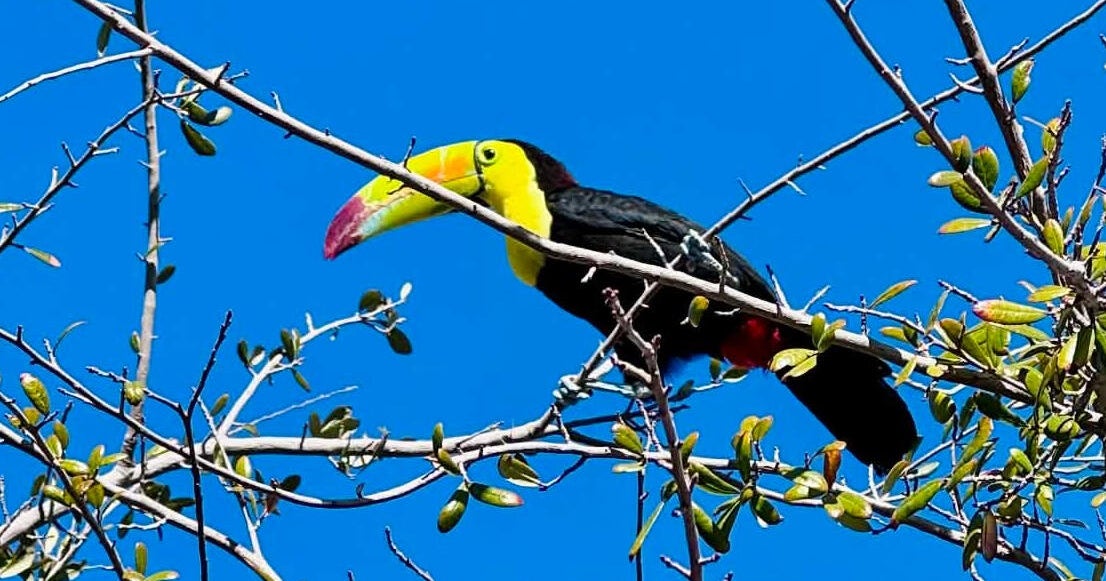
Toucan Sam rescued from Las Vegas; SouthWest Exotic Avian Rescue details health assessment and rehabilitation process.
Discovery and Rescue of Sam, the Toucan
For months, a toucan named Sam has been wandering around Las Vegas, drawing attention from both local residents and wildlife enthusiasts. The SouthWest Exotic Avian Rescue (SWEAR) group announced on Wednesday that they had successfully rescued Sam, bringing an end to his prolonged stay in the city.
Background of Sam's Journey
Sam first appeared in Las Vegas in November 2025, sparking concern among bird experts and animal lovers due to the challenges of his survival. Skye Marsh, president and co-founder of SWEAR, recounted how a homeowner discovered Sam when he flew into their garage on February 13, 2026.
Health Assessment and Rehabilitation
Upon capturing Sam, the rescue group took him to a local veterinarian for evaluation. Initial signs indicated that Sam had faced some challenges in his time in Las Vegas, including dehydrated skin and a chipped beak. However, he appeared stable overall. The vet administered fluids and performed blood tests. Additionally, staff provided healthier food options, which improved Sam's overall health condition.
Local Impact and Future Plans
Sam’s presence in the community had captured public interest, with numerous photos and reports circulating online. The rescue group set up a cage near where they believed he was feeding, hoping to lure him back into captivity. Marsh shared that Sam seemed to be eating better food since then, as evidenced by his healthier droppings leading up to the rescue.
Marsh indicated that Sam's original owners had posted about their bird escaping from its cage in November 2025 but have not been contacted by SWEAR. The toucan will undergo a 30- to 45-day quarantine at a staff member’s house, ensuring he does not contract or spread bird flu.
Natural Habitat and Dietary Needs
According to the San Diego Zoo, toucans are native to Central and South American rainforests, where they spend most of their lives in high canopies. Their diet primarily consists of fruits but also includes insects, tree frogs, and lizards. Marsh suggested that Sam likely subsisted on figs and pomegranates from trees initially, eventually switching to citrus, which can be detrimental to toucans.
Marsh concluded that both the human rescuers and Sam himself were relieved at his rescue. "I think he was a little bit relieved," she told local media, “I think he was done doing the free bird thing.”
Conclusion
Sam's journey from an urban desert to captivity highlights the challenges faced by exotic birds in unfamiliar environments. The successful rescue ensures that Sam can now return to more suitable conditions, potentially allowing him to live out his life in a setting closer to its natural habitat.
Source: Read Original Article
Post a Comment