
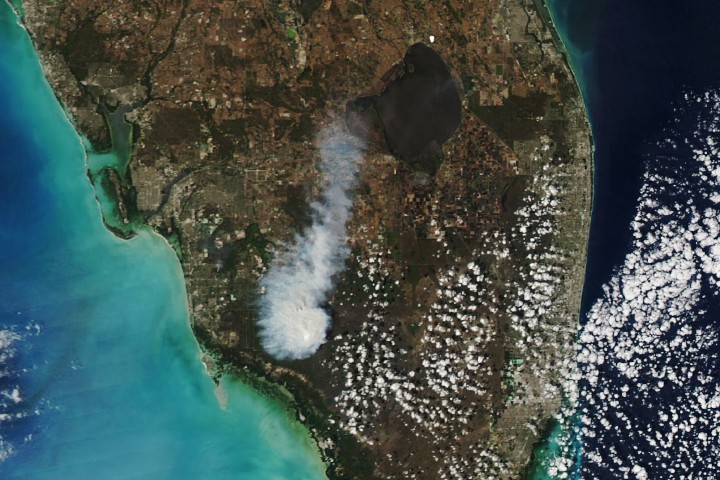
Big Cypress National Preserve wildfire "National" spreads rapidly, consuming 24,000 acres; impacts local visibility and road access.
Overview of the Big Cypress National Preserve Fire
On February 22, 2026, a significant wildfire broke out in Big Cypress National Preserve, approximately 25 miles (40 kilometers) east of Naples, Florida. The blaze was named the "National" fire due to its rapid spread and impact on local ecosystems.
Discovery and Spread of the Fire
### Early Detection and Initial Impact
The Moderate Resolution Imaging Spectroradiometer (MODIS) aboard NASA’s Aqua satellite captured an image of the fire on February 25, 2026. By this time, approximately 24,000 acres (9,700 hectares) had been consumed by the wildfire. According to reports, smoke from the fire reduced visibility and led to a brief closure of Interstate 75, colloquially known as "Alligator Alley," which runs through the northern part of the preserve.
### Fire Dynamics and Environmental Impact
The fire's spread was exacerbated by dry vegetation and recent frost damage, both of which contributed to an abundance of fuel. Persistent extreme drought conditions further intensified these factors. By February 28, the fire had expanded to over 35,000 acres (14,000 hectares). As of March 2, 2026, the fire's size remained roughly unchanged at around 38,000 acres and was approximately 38 percent contained.
Meteorological Factors and Fire Dynamics
### Wind Patterns
Meteorological conditions played a crucial role in the fire’s spread. Smoke initially moved southward but shifted direction by February 25, causing it to drift northward, which is evident from satellite imagery provided by NASA's Earth Observatory.
### Fire Potential Outlook
The National Interagency Fire Center forecasted above-normal fire potential across Florida through May 2026 due to ongoing drought conditions and other environmental factors. This outlook underscores the need for heightened preparedness and response measures in affected regions.
Conclusion
The wildfire in Big Cypress National Preserve serves as a stark reminder of the increasing challenges posed by extreme weather events and persistent drought conditions. Continued monitoring and adaptive management strategies are essential to mitigate future risks and protect local ecosystems, communities, and infrastructure.
Source: Read Original Article
Post a Comment