
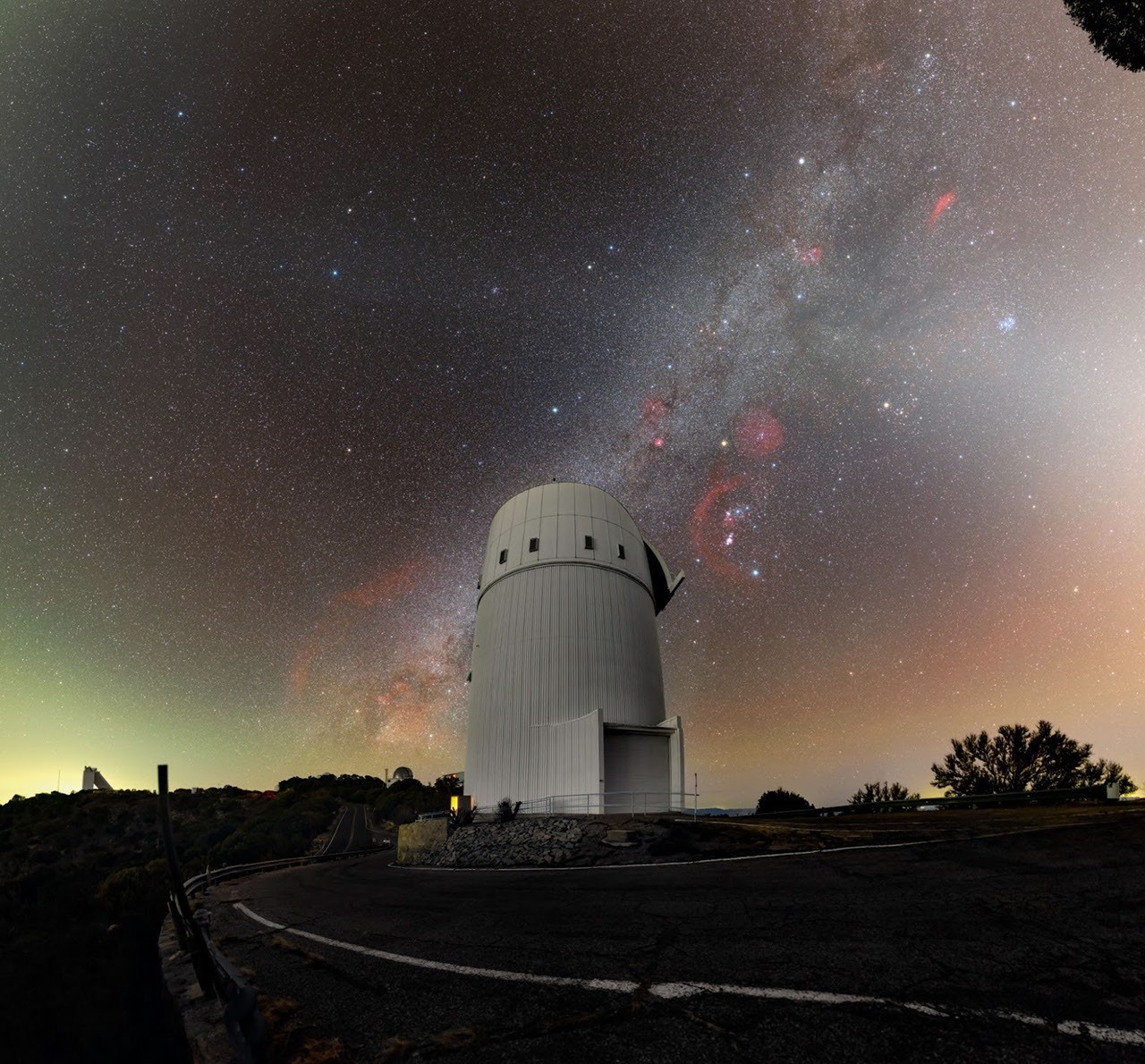
Expand The Daily Minor Planet project with data from the Bok 2.3-meter telescope, enhancing survey coverage and improving detection of faint objects.
Expansion of Data Sources
The Daily Minor Planet citizen science project has expanded its data sources, incorporating images from the Bok 2.3-meter telescope at Kitt Peak National Observatory. This addition complements the existing nightly data from the Catalina Sky Survey's Mt. Lemmon telescope in Arizona. The Bok telescope, operated by the University of Arizona's Steward Observatory, is specifically utilized for surveying new near-Earth objects (NEOs).
Enhanced Data Quality and Depth
Data from the Bok telescope offers a significant improvement, revealing objects that are approximately two to three times fainter than those detected by the Mt. Lemmon telescope. While software often struggles with such faint celestial bodies, human pattern recognition capabilities excel in processing this data, making contributions from citizen scientists more valuable than ever before.
Targeted Survey Coverage
A notable aspect of the Bok telescope's data is that it primarily captures images from the ecliptic, the region of the sky where asteroids and comets are predominantly found. The project team anticipates that this deeper, ecliptic-focused coverage will significantly increase the number of main-belt asteroids that can be recovered and confirmed. Additionally, the Bok telescope will uncover new near-Earth asteroid candidates, enriching the project's database and scientific output.
Opportunities for Citizen Scientists
The inclusion of Bok data marks a new era for The Daily Minor Planet citizen science project, hosted by Zooniverse. Participants can now contribute to the search for NEOs using their laptops or smartphones, with new Bok subject sets scheduled to be added soon. These sets will present a greater challenge but also offer a more rewarding experience.
Invitation to Join
Anyone interested in contributing to space exploration can join The Daily Minor Planet project. By participating, individuals can help uncover asteroids and potentially hazardous objects that might pose a threat to Earth. The project remains regularly updated, ensuring ongoing engagement and discovery.
Source: Read Original Article
Post a Comment