
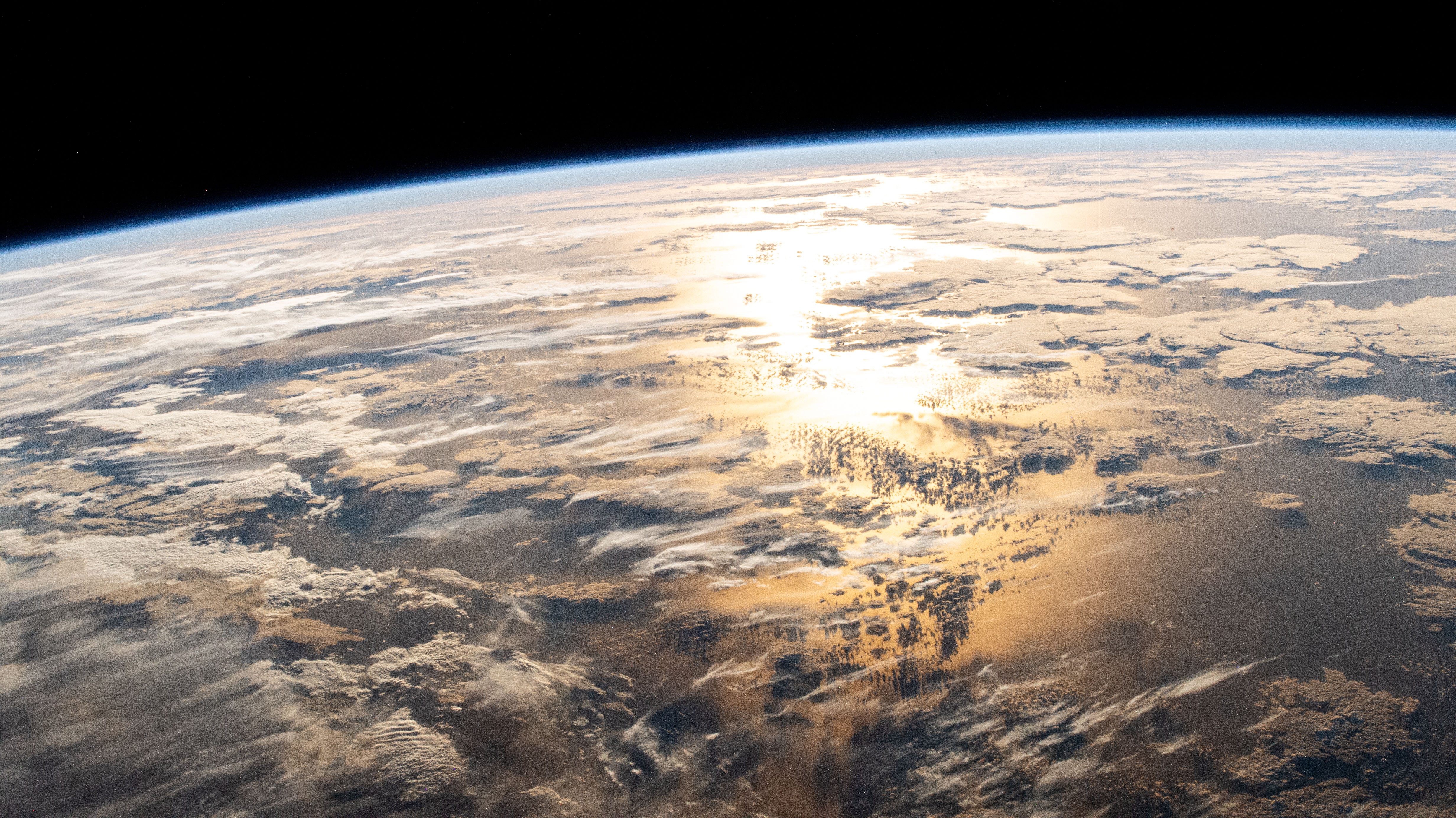
Sunglint creates stunning space-based reflections but poses challenges for ocean monitoring due to obscured features; learn about this natural phenomenon a
Sunglint: A Phenomenon Observed from Space
On March 5, 2025, at sunrise over the Atlantic Ocean, sunlight illuminated a partly cloudy horizon as the International Space Station orbited approximately 263 miles above Earth. This natural phenomenon, known as sunglint, occurs when sunlight reflects off water surfaces at an angle matching that of satellite sensors.
The Optical Phenomenon of Sunglint
Sunglint creates a mirror-like specular reflection of sunlight on water bodies and sends the reflected light back to either a satellite or astronaut observing from space. While this phenomenon often results in visually striking images, it poses challenges for remote sensing scientists, especially those studying oceanic conditions.
Challenges for Remote Sensing Scientists
For oceanographers who rely on satellites for data collection, sunglint can obscure features such as phytoplankton and ocean color. To address these issues, researchers have developed techniques to filter out sunglint-contaminated imagery from their data archives. Despite the complications it introduces, sunglint also provides unique opportunities for scientific research.
Unique Scientific Opportunities
One of the benefits of sunglint is its ability to enhance the detection of oil on water surfaces. Whether from natural seeps or human-caused spills, a layer of oil typically smooths over the water surface, making it easier to identify through satellite imagery during sunglint events. This phenomenon allows for more accurate and timely monitoring of potential environmental hazards.
Conclusion
In summary, while sunglint can complicate data collection for remote sensing scientists, particularly in oceanography, its unique properties also offer valuable insights into various environmental conditions, such as the detection of surface oil. These findings underscore the importance of continued research to better understand and utilize this natural phenomenon.
Source: Read Original Article
Post a Comment