
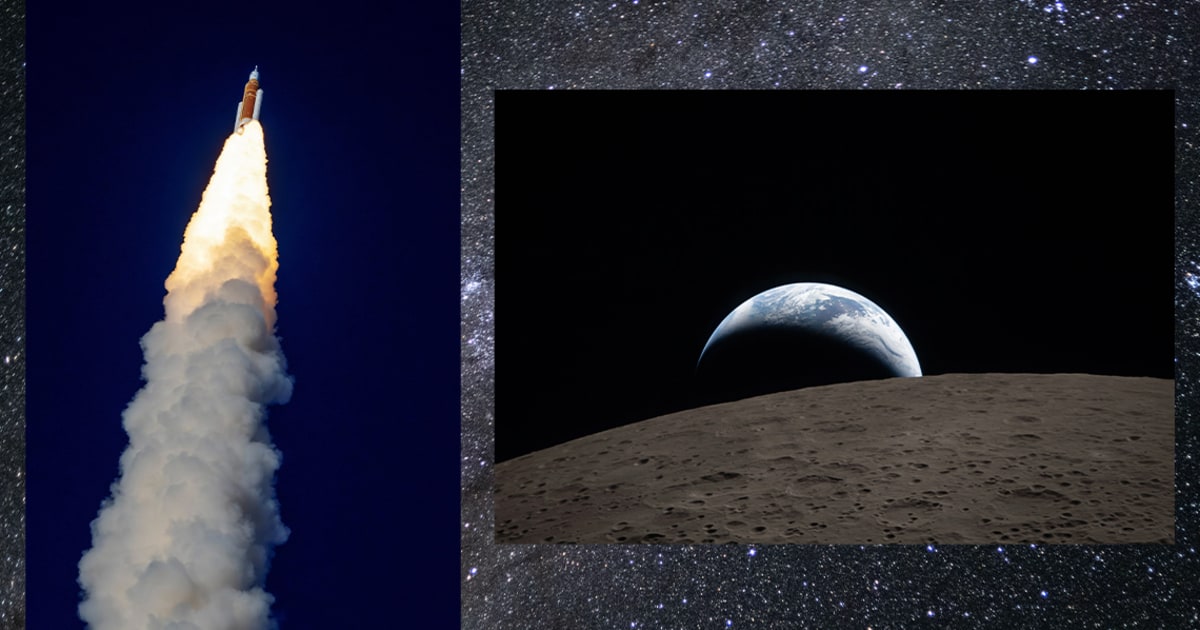
Lunar impact observations and crew eyewitness reports from recent Orion mission highlight the rare cosmic events on the moon's surface.
Lunar Impact Observations: A Rare Event
While such observations are uncommon, they frequently occur on the moon due to the absence of an atmosphere that could shield it from cosmic debris. These impacts provide crucial data for researchers studying the lunar surface and its evolutionary history.
Crew's Eyewitness Report
During a recent flyby mission, astronauts aboard Orion witnessed six bright flashes—a rare sight on the moon. Kelsey Young, the Artemis II lunar science lead, expressed excitement over this event, noting that her team members were "literally jumping up and down" upon receiving the news.
Re-entry into Earth's Atmosphere
After completing their mission objectives around the moon, the astronauts embarked on a three-day journey back to Earth. By Tuesday afternoon, the Orion capsule had exited the lunar sphere of influence, marking the beginning of its high-stakes re-entry phase. This critical part of the mission exposed the spacecraft to extreme temperatures approaching 5,000 degrees Fahrenheit as it passed through Earth's atmosphere.
Scientific Implications
These cosmic crashes not only enhance our understanding of the moon but also provide insights into space debris and impact craters on other celestial bodies. The data collected can contribute significantly to long-term lunar research and exploration efforts.
Source: Read Original Article
Post a Comment