
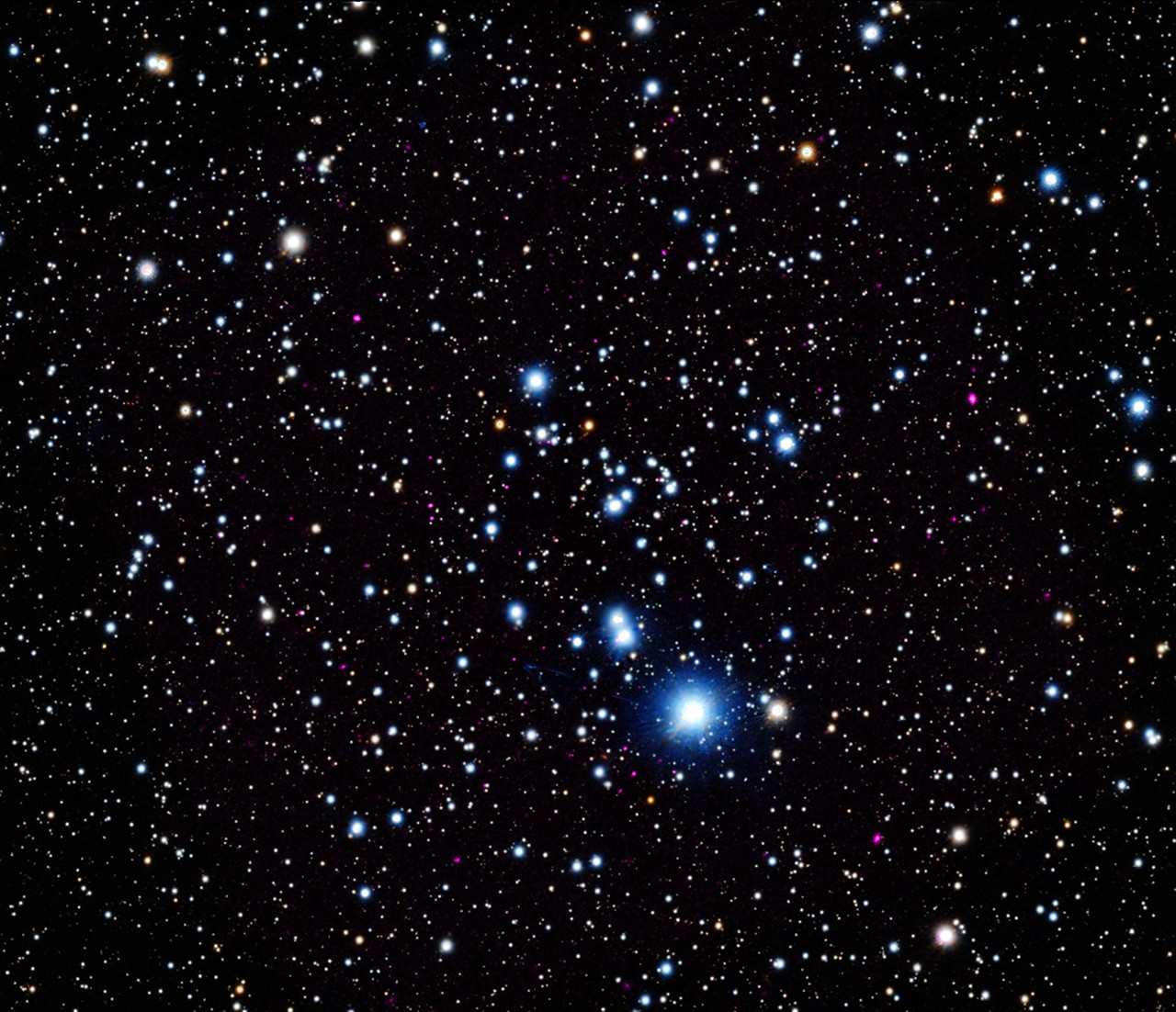
Astronomers discover young sun-like stars emit less X-ray radiation, potentially supporting stable planetary atmospheres and life development.
Discovery of Dimming Sun-like Stars
Astronomers have uncovered a phenomenon indicating that young stars similar to our Sun are producing significantly less X-ray radiation than previously believed. This discovery, published in The Astrophysical Journal, was made using data from NASA's Chandra X-ray Observatory and other telescopes.
Impact on Planetary Atmospheres
The quieting of these young stars could have profound implications for the potential development of life on orbiting planets. High levels of X-rays can strip away a planet’s atmosphere, hindering the formation of molecules essential for organic life as we know it. In contrast, quieter stars may better support the maintenance and stability of planetary atmospheres.
Observational Evidence
The study focused on eight star clusters, ranging in age from 45 million to 750 million years old. Using new Chandra observations combined with archival data, researchers found that Sun-like stars emitted only about a quarter to a third of the X-rays predicted by current models. This rapid decline occurs after just a few hundred million years for stars similar in mass to our Sun.
Sun's Historical Context
The findings suggest that several billion years ago, our Sun may have also undergone this quieting process, potentially laying the groundwork for life on Earth. While science fiction often portrays alien civilizations harnessing stellar energy, the real observation indicates a natural reduction in X-ray output due to weakened internal magnetic fields.
Comparative Analysis
Stars with masses similar to that of the Sun exhibited more rapid X-ray dimming compared to less massive stars, which maintained higher levels of radiation for longer periods. This differential behavior could influence the likelihood of hosting planets with robust atmospheres and potentially supporting life.
Methodology and Future Research
To gather this data, scientists utilized observations from Chandra as well as ESA’s Gaia satellite and X-ray data from the ROSAT mission. The team will continue to explore potential causes for the observed rapid dimming, including changes in magnetic field generation within stars as they age.
Implications for Understanding Stellar Evolution
This research provides critical insights into the evolution of Sun-like stars during their youth, filling a significant gap in our understanding of stellar behavior and planetary habitability. NASA's Chandra X-ray Observatory plays a crucial role in these investigations, offering unprecedented views of celestial phenomena.
Source: Read Original Article
Post a Comment