
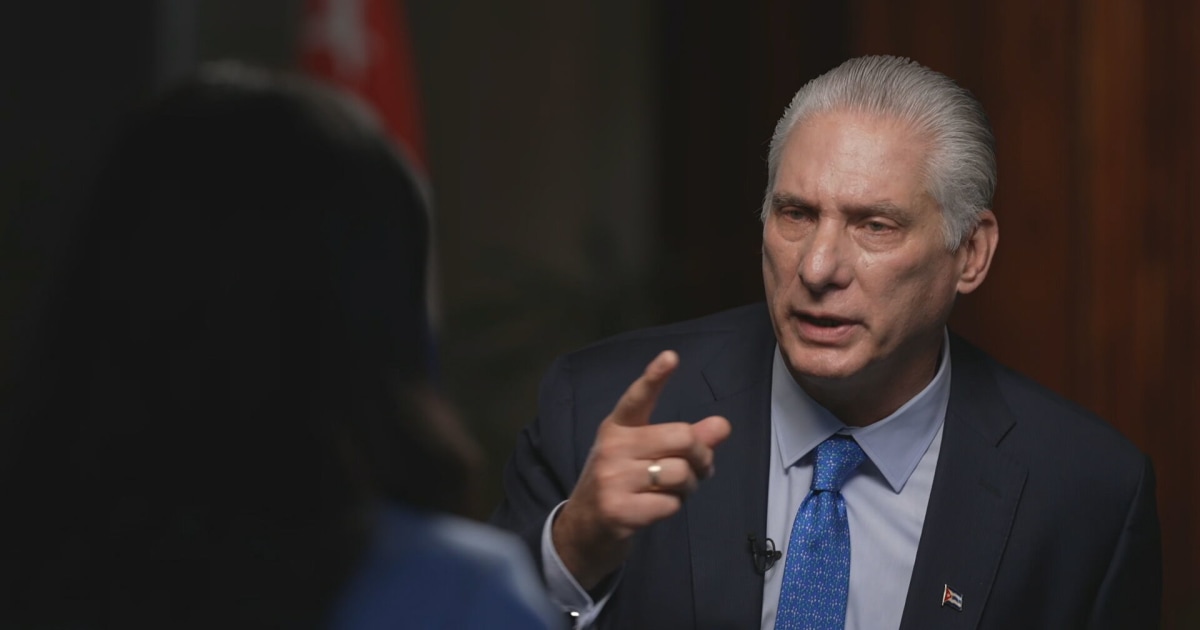
Cuban President Miguel Díaz-Canel asserts readiness to defend against U.S. invasion threats, amid tensions over sanctions and domestic political pressures
Cuban President’s Firm Stand Against U.S. Invasion Threats
In an exclusive interview with *Meet the Press*, Cuban President Miguel Díaz-Canel declared that his nation is prepared to "give our lives for the revolution" should a U.S. invasion occur. This statement came as part of a broader discussion on Cuba's stance against external interference.
U.S. Sanctions and International Diplomacy
The interview highlighted tensions between the United States and Cuba, with Díaz-Canel also touching upon ongoing U.S. sanctions and their impact. He expressed reluctance to engage in direct negotiations but emphasized the need for dialogue to address mutual concerns.
Domestic Political Landscape
In a separate segment, Congressman Byron Donalds stated his support for "full-scale regime change" in Cuba. This declaration underscores the internal political dynamics within the United States regarding its stance on Cuba and other countries facing similar challenges.
U.S. Legislative Actions Against Alleged Misconduct
Congresswoman Pramila Jayapal criticized the U.S. oil blockade of Cuba as "outrageous," reflecting a growing bipartisan opposition to such measures. She further announced her intention to vote for the expulsion of Reps. Adam Schiff and Zoe Lofgren, citing alleged sexual misconduct.
Analysis: Implications for U.S.-Cuba Relations
The Cuban president's statements echo long-standing rhetoric about national sovereignty but also highlight potential escalations in regional tensions. Meanwhile, U.S. lawmakers continue to debate strategies and policies towards Cuba, with differing opinions on the effectiveness of current measures.
Broader Context: Global Political Climate
These discussions come amid a backdrop of global shifts, including Iran peace talks and ongoing geopolitical negotiations involving multiple stakeholders. The interviews reflect broader concerns about regime stability and regional power dynamics in Latin America.
Source: Read Original Article
Post a Comment