
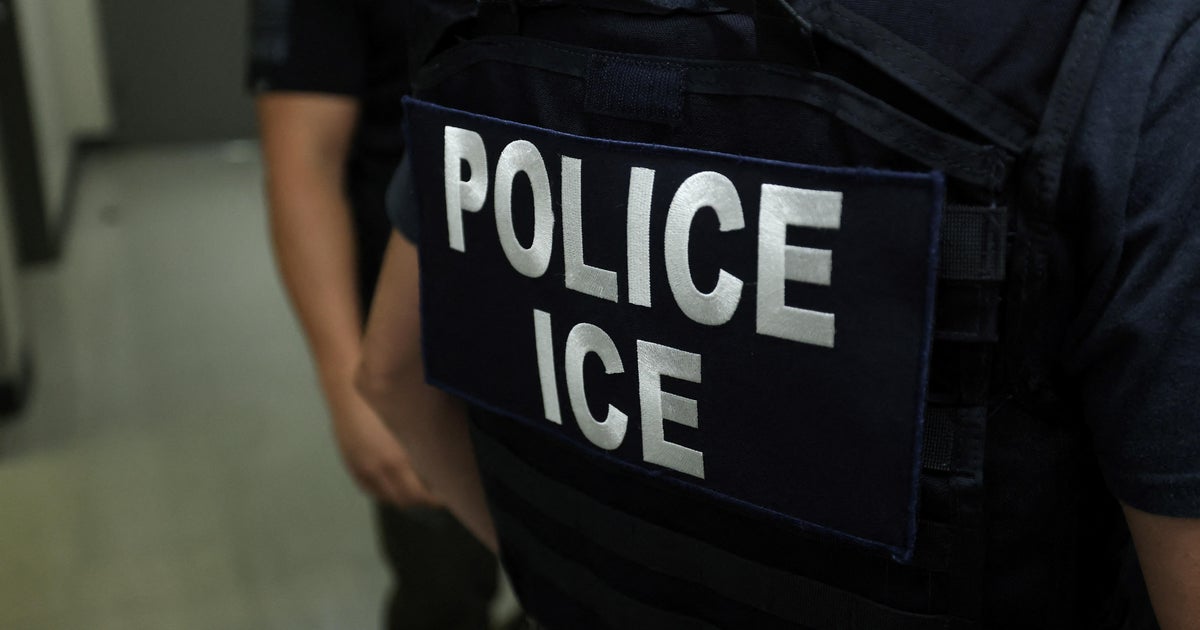
Former ICE instructor Ryan Schwank will testify that rapid workforce expansion may result in untrained officers without proper legal knowledge or use-of-fo
In a forthcoming congressional hearing, a former U.S. Immigration and Customs Enforcement (ICE) instructor, Ryan Schwank, will testify that the agency's rapid expansion of its workforce may result in untrained officers executing immigration enforcement duties without necessary legal knowledge or proper use-of-force training. The whistleblower, an attorney who resigned from ICE earlier this month, asserts that without reforms, thousands of new recruits could graduate without understanding their constitutional duties, the limits of their authority, and the ability to identify unlawful orders.
Schwank's resignation marks one of the first instances of an ICE official from the second Trump administration publicly criticizing the agency and its training protocols. On Monday, he is scheduled to testify before Congress at a hearing organized by Democratic representatives Richard Blumenthal (Senator, Connecticut) and Robert Garcia (Representative, California). According to congressional aides, Schwank tendered his resignation on February 13th this year.
The hearing follows recent incidents involving federal immigration officers using deadly force, including the January killing of Renee Good in Minneapolis. Schwank's testimony is expected to further bolster Democrats' efforts to withhold funding for the Department of Homeland Security until the Trump administration agrees to a series of ICE reforms, such as prohibiting agents from wearing masks.
In prepared remarks for the hearing, Schwank wrote, "I am duty bound to tell you that the ICE Basic Immigration Enforcement Training Program is now deficient, defective, and broken."
In his congressional testimony, Rep. David Schwank accused Immigration and Customs Enforcement (ICE) officials of misrepresenting the extent of training provided to new recruits. Supporting this allegation are internal agency documents obtained by CBS News, part of a disclosure shared with Congress by Schwank and a second U.S. government whistleblower.
The documents in question include a July 2025 syllabus and an updated version from February 2026 for the ICE officer training program. Over a seven-month period, training duration decreased from 72 days to 42 days, with multiple use-of-force courses seemingly excised.
Additionally, a model daily schedule from January 2026 indicates that some new recruits are receiving approximately half the training hours of previous cohorts, according to analysis by Democratic staff of the Senate Permanent Subcommittee on Investigation. Furthermore, a list of required exams from October 2025 demonstrates that cadets are now only assessed on a fraction of the topics necessary for officer certification four years prior. Eliminated evaluations seem to focus on use-of-force protocols, such as "Encounters to Detention" and "Judgment Pistol Shooting."
In response to these allegations, the Department of Homeland Security (DHS), which governs ICE, denied any elimination of training requirements for new recruits. In a statement, DHS asserted that training had been streamlined to eliminate redundancy and incorporate technological advancements, without compromising essential content. The department maintained that candidates still learn the same elements and meet the same high standards as always required by ICE. No subject matter has reportedly been removed, according to DHS.
During a recent congressional hearing, Acting ICE Director Todd Lyons confirmed that recruits with law enforcement experience are undergoing abbreviated training.
Immigration and Customs Enforcement (ICE) agents undergo modified training programs to focus on the Immigration Nationality Act, immigration law, and ICE-specific protocols, according to ICE acting director Tae Johnson. Documents disclosed to Congress reveal an anticipated 4,000 new recruits graduating from this program by September's end, as part of the administration's plan to hire 10,000 additional officers through funding granted by the One Big Beautiful Bill Act.
Testifying before Congress, ICE training specialist Brian Schwank, who joined ICE in 2021, expressed concerns about current enforcement tactics promoted by Trump-era ICE leadership. These allegations were initially made anonymously in a whistleblower complaint submitted to Congress in January.
The complaint highlighted a memo issued by Johnson that reportedly overturned longstanding rules preventing ICE officers from executing warrantless home entries, a practice that, historically, has been deemed a violation of constitutional protections. However, the memo permits ICE agents to forcibly enter homes without judicial warrants when targeting an individual with a deportation order.
ICE general counsel Jimmy Percival has defended this practice, arguing that administrative warrants signed by ICE officials are sufficient because individuals in the U.S. illegally do not enjoy the same constitutional rights as U.S. citizens. It is noted that ICE only employs these administrative warrants when an individual "has received a final order of removal from an immigration judge."
Stevan Bunnell, a former DHS general counsel, has yet to comment on this matter.
In a significant development, Pennsylvania state Senator Schwank will testify alongside an unnamed party at Monday's hearing, asserting that the Supreme Court has deemed administrative warrants issued by authorities as unconstitutional. Senator Schwank stated in prepared remarks, "The police cannot sign their own warrants."
Concurrently, documents leaked to Congress reveal that U.S. Immigration and Customs Enforcement (ICE) is preparing to graduate over 3,000 new enforcement officers by June. In a statement, Senator Richard Blumenthal emphasized Schwank's actions as fulfilling "a moral imperative." He further urged anyone disheartened by current practices or authority demands to speak out, stating, "You can make a real difference by coming forward."
ICE has faced mounting pressure from the White House to intensify arrests and deportations under the Trump administration, which pledged to oversee the largest deportation in American history. Last year, ICE executed nearly 400,000 arrests, averaging approximately 1,000 per day—falling short of the White House's 3,000 daily target but still an increase from the 300 average in 2024.
According to a confidential Department of Homeland Security (DHS) document obtained by CBS News, only 14% of those arrested by ICE had violent criminal records. In total, 60% of individuals arrested by ICE over the past year had criminal charges or convictions, while about 40% did not have any criminal record beyond civil immigration violations.
Source: Read Original Article
Post a Comment