
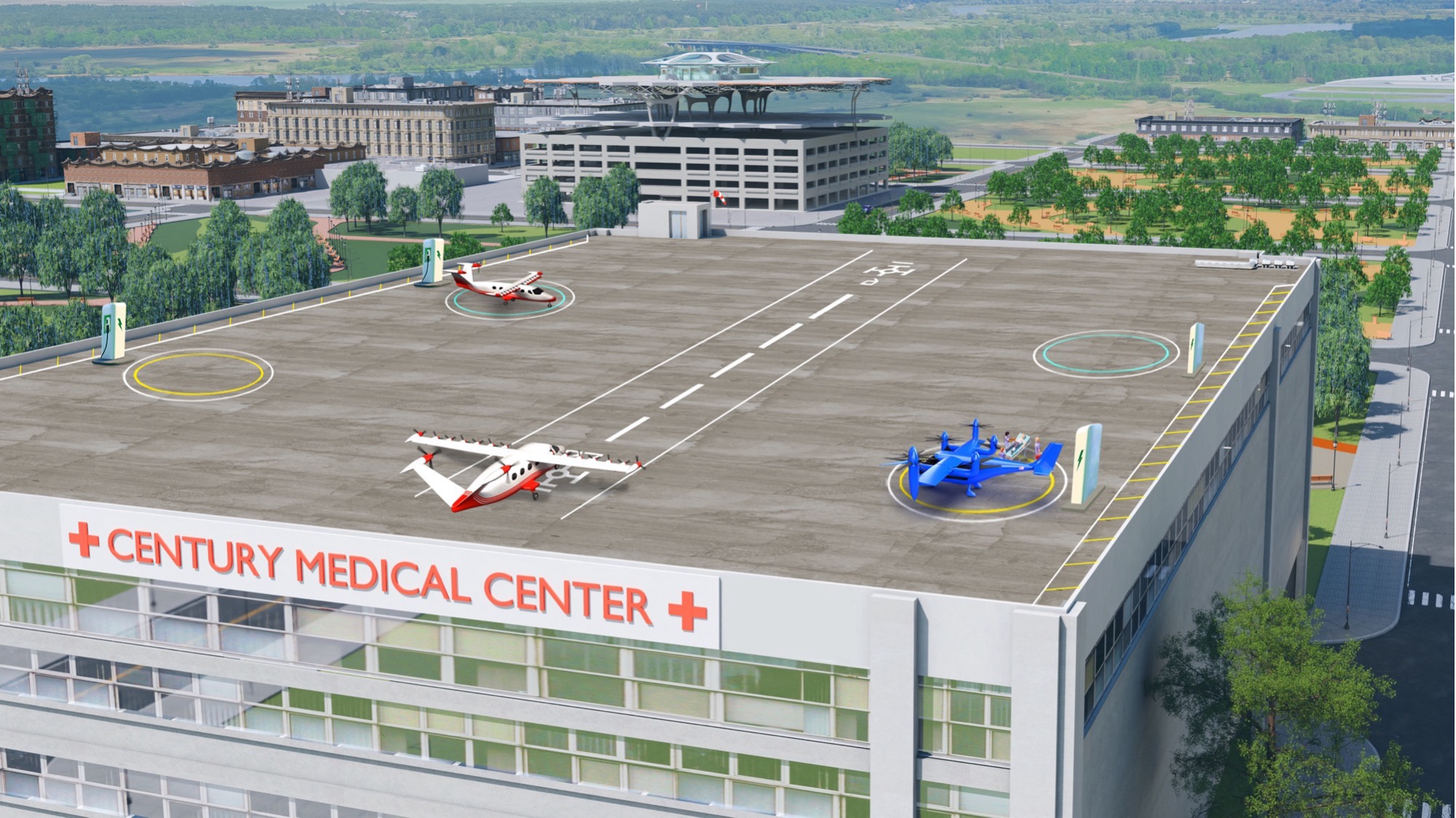
Advanced Air Mobility aircraft concepts, including those for medical transport, have been the focus of a recent NASA study on aircraft noise. The research, which encompassed sounds from multiple types of advanced air mobility concept aircraft, suggests that where these new aircraft are heard could significantly impact public response, according to NASA's findings.
NASA's ongoing efforts in aeronautics aim to facilitate novel air transportation options for both people and goods within U.S. communities. The agency's continued study of aircraft noise is part of this endeavor, particularly as it pertains to air taxis—a term encompassing various aircraft designed for short-distance travel ranging from personal journeys to medical transport.
Researchers in the VANGARD (Varied Advanced Air Mobility Noise and Geographic Area Response Difference) test sought to determine if residents of noisy urban areas would react differently to air taxi sounds compared to those in quieter suburban settings. The study, conducted from late August through September 2025, involved 359 participants in Los Angeles, New York City, and Dallas-Fort Worth, who were played 67 unique aircraft sounds, including NASA-owned industry concept designs. To maintain objective feedback, the research team withheld aircraft manufacturer names and did not show participants images of the aircraft they heard.
Preliminary results indicate that residents living in noisy areas were more bothered by air taxi sounds than those in quieter environments. The VANGARD team is currently analyzing the data to further understand these findings, though they currently hypothesize that people in louder surroundings may be more sensitive to additional noise. Researcher Sidd Krishnamurthy has been testing a remote platform at NASA's Langley Research Center to study human response to air taxi noise.
In Hampton, Virginia, a study led by Sidd Krishnamurthy, lead researcher at NASA's Langley Research Center, aimed to understand human reactions to future aircraft sounds, particularly those of emerging air taxis. The study filled a critical gap in predicting human responses to noise, which will influence the design and operation of future advanced air mobility aircraft.
During the study, participants listened to individual aircraft flyover sounds and rated their annoyance levels. Their locations were categorized into high and low background noise zones based on the zip codes provided. The objective was to determine if people in different noise environments would react differently to air taxi sounds, even without their usual background noises present during the test.
Most participants listened from their home locations using personal audio devices. To complement this testing, a control group of 20 individuals listened in-person at NASA Langley in June, utilizing tablets and headphones with standardized audio settings. The results showed a similar response between the control group and those who tested from home.
Various factors influence human responses to aircraft noise. This study did not aim to answer every question but provided initial insights, such as the potential impact of air taxi sounds in different background noise environments. However, it did not examine the possible effects of high background noise masking air taxi noise.
The findings from this study and any subsequent efforts will guide the design and operation of future advanced air mobility aircraft. This research falls under the Revolutionary Vertical Lift Technology project and contributes to NASA's advanced air mobility research, which is part of the Advanced Air Vehicles Program.
NASA's Aeronautics Research Mission Directorate Announces New Research Projects to Enhance Aircraft Efficiency and Safety
WASHINGTON, D.C. — The NASA Aeronautics Research Mission Directorate has unveiled a series of new research projects aimed at improving the efficiency and safety of aircraft. This initiative, launched on [insert date], will focus on advancing technologies in various areas, including propulsion systems, materials, autonomy, and operations.
The primary objective is to develop more fuel-efficient aircraft while reducing emissions and noise levels. These goals are aligned with NASA's commitment to sustainable aviation and addressing climate change concerns.
"These projects represent the cutting edge of aeronautics research," said Jaiwon Shin, associate administrator for NASA's Aeronautics Research Mission Directorate. "They will help us explore innovative solutions that could significantly improve aircraft performance and safety."
Key initiatives include:
1. X-59 QueSST: A supersonic X-plane designed to demonstrate a quiet supersonic passenger jet, addressing community concerns about sonic booms.
2. Advanced Air Mobility (AAM): Research aimed at integrating unmanned aircraft systems and autonomous vehicles into the National Airspace System.
3. AgileAir: A project focusing on developing a versatile, flexible wing design to enhance aircraft performance in various operating conditions.
4. Electric Propulsion Flight Research: Studies on advanced electric propulsion technologies for improved fuel efficiency and reduced emissions.
5. Advanced Materials for Aviation Structures (AMAS): Research into high-performance materials for lightweight, durable airframes.
These projects will receive funding through NASA's Flight Demonstrations of Novel Technologies (FDNT) program, which supports the development and testing of innovative aeronautics concepts. Collaboration with industry partners is expected to further accelerate the progress of these technologies.
NASA anticipates that these research initiatives will contribute significantly to the future of aviation by promoting sustainable practices and ensuring safety for both passengers and communities. Further details about each project can be found on NASA's official website.
Source: Read Original Article