
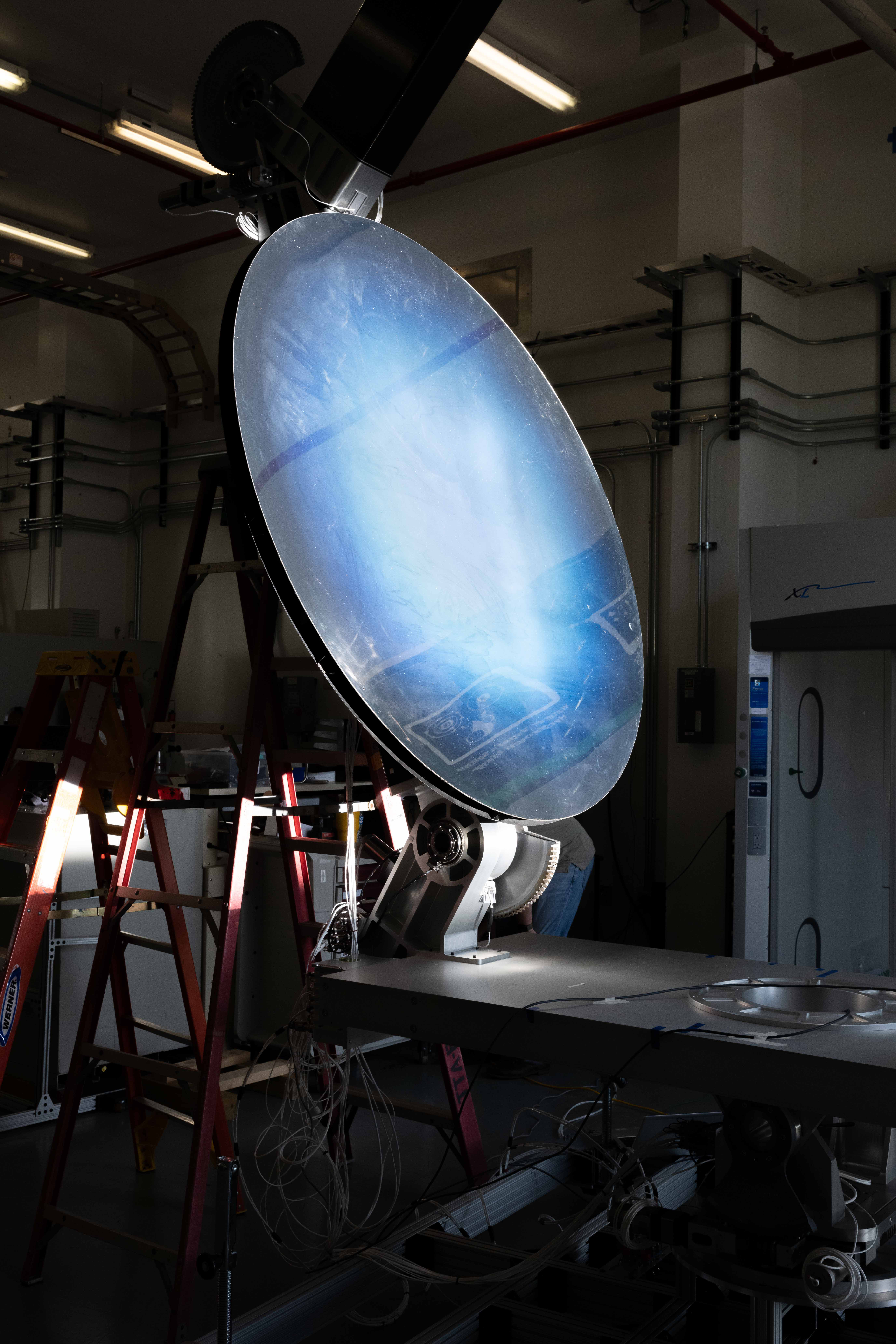
Test of solar concentrator for CaRD project at NASA's Johnson Space Center aims to produce carbon monoxide from lunar regolith, supporting future space exp
Overview of the Carbothermal Reduction Demonstration (CaRD) Project
On August 7, 2025, a solar concentrator was tested as part of the Carbothermal Reduction Demonstration (CaRD) project at NASA's Johnson Space Center. This initiative aims to develop technologies for oxygen production on the Moon and Mars.
Technological Integration and Testing Process
For this specific test, engineers integrated a solar concentrator with mirrors and software. The objective was to confirm the generation of carbon monoxide from simulated lunar regolith under sunlight conditions. This process involved focusing solar radiation onto a target material to induce chemical reactions that produce useful byproducts such as carbon monoxide.
Potential Applications in Space Exploration
If successfully deployed, this technology could significantly enhance long-term human presence on the Moon. By using only lunar materials and sunlight, it would enable the production of propellant for spacecraft. This could drastically reduce costs associated with resupply missions from Earth, thereby making space exploration more sustainable.
Moreover, the same downstream systems used to convert carbon monoxide into oxygen have potential applications in Martian conditions. These systems can adapt to produce oxygen and methane from carbon dioxide on Mars, further advancing plans for human habitation on the Red Planet.
Funding and Programmatic Support
The CaRD project is funded by NASA’s Game Changing Development (GCD) Program. This initiative supports advanced technologies that will revolutionize space exploration techniques and address significant national needs in energy, transportation, and other critical areas.
NASA's GCD program aims to advance innovative concepts that can transform aerospace capabilities while addressing pressing societal challenges. The CaRD project exemplifies the agency’s commitment to fostering cutting-edge research and development for future lunar and Martian missions.
Source: Read Original Article
Post a Comment