
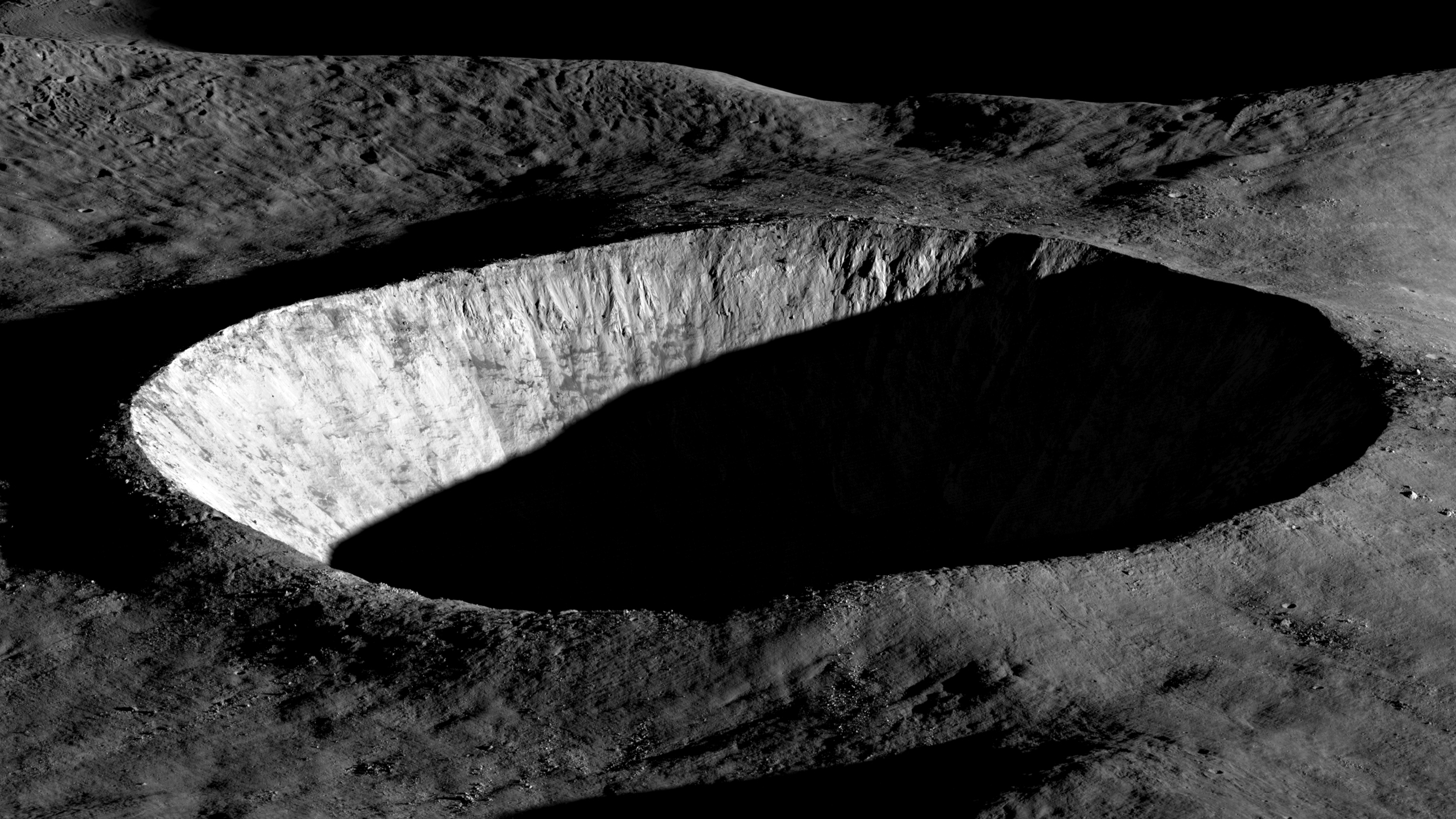
NASA's LROC captures detailed images of the Moon's terrain, showcasing stark contrasts in craters and landscapes. Explore the lunar surface with high-resol
Lunar Reconnaissance Orbiter Camera: Unveiling the Moon's Terrain
NASA's Lunar Reconnaissance Orbiter Camera (LROC) recently captured an image of an unnamed crater on the Moon’s western wall. This photograph, taken on August 30, 2023, showcases the interplay of early morning sunlight, creating deep shadows on the crater's surface and interior. The image highlights the stark contrasts in the lunar landscape, emphasizing the crater's topography.
The Lunar Reconnaissance Orbiter and Its Mission
Launched in June 2009, the Lunar Reconnaissance Orbiter (LRO) has been in orbit around the Moon for over a decade. LRO's primary mission focused on creating a 3D map of the lunar surface, identifying potential landing sites and resources, investigating the radiation environment, and demonstrating new technologies for future robotic and human exploration. By 2011, LRO had generated the highest-resolution, near-topographical map of the Moon. In 2014, it published an interactive mosaic of the lunar North Pole, providing valuable data for future missions.
High-Resolution Imaging of Lunar History
LROC has also captured detailed images of numerous lunar landing sites from NASA's Apollo missions and other programs. These high-resolution photographs offer unprecedented insight into the Moon's history and the sites where humanity first ventured onto another celestial body. Additionally, LRO conducted the first demonstration of laser communication with a lunar satellite, marking a significant technological milestone.
NASA’s Image of the Month Program
The image of the unnamed crater was selected as NASA's Science Image of the Month for March 2026. Each month, NASA’s Science Mission Directorate highlights a significant image to inspire and educate the public. This selection includes desktop wallpaper downloads and links to related topics, activities, and games, fostering engagement and curiosity about the Moon and beyond.
Source: Read Original Article
Post a Comment