
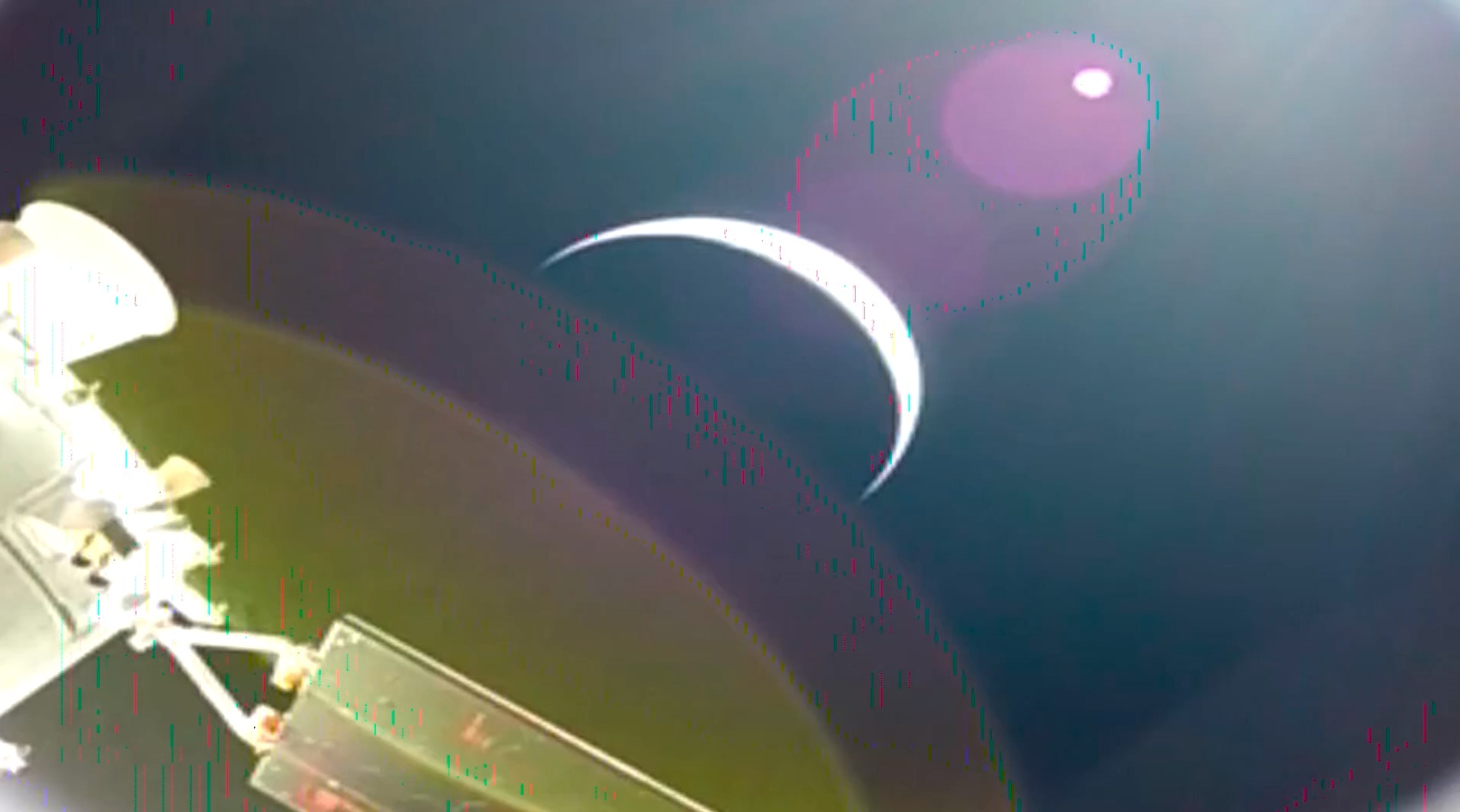
NASA's Artemis II Mission: Crewed Orion spacecraft launches; key milestones include translunar injection and critical system testing.
Artemis II Mission: Key Milestones and Scientific Objectives
The first crewed flight of NASA's Orion spacecraft under the Artemis program marks a significant milestone in space exploration, with astronauts Reid Wiseman, Victor Glover, Christina Koch, and Jeremy Hansen successfully executing critical maneuvers to achieve lunar orbit. The mission, launched from Kennedy Space Center on April 1 at 6:35 p.m. EDT, aims to test critical systems for future deep space missions.
Translunar Injection Burn and Orbital Trajectory
Following a successful translunar injection burn that lasted approximately six minutes, Orion has accelerated into an outbound trajectory towards the Moon. This maneuver, crucial for breaking free from Earth's gravitational pull, sets the stage for detailed system checks and operational tests during the spacecraft’s journey.
Early Operations and System Checkouts
Shortly after launch, the four solar array wings were deployed, providing essential power to support the mission’s critical systems. Engineers and crew began transitioning Orion from its launch configuration to flight operations, initiating checks on key systems including communication networks and life support. The initial phase included several tasks such as deploying CubeSats, establishing deep space communications, and acclimating to the microgravity environment.
Lunar Flyby and Scientific Observations
On April 6, astronauts will perform a lunar flyby that includes high-resolution photography of both familiar and previously unseen areas of the Moon. This flyby aims to capture detailed imagery of the far side, where sunlight provides unique lighting conditions for enhanced visibility and scientific observation. The mission also includes conducting experiments and tests with the crew contributing their own observations.
Mission Conclusion and Re-entry
Upon completion of these tasks, Orion will return to Earth, landing in the Pacific Ocean off the coast of San Diego. This conclusion marks a successful test flight that provides valuable data for future Artemis missions, paving the way for more extensive lunar exploration and eventual Mars missions.
Future Prospects and Scientific Insights
The Artemis program aims to explore more of the Moon’s surface, gathering scientific data to inform potential long-term habitation strategies. The mission also serves as a crucial step in developing technologies and infrastructure that could support future human missions to Mars, laying down a foundation for sustainable space exploration.
For updates on the latest mission progress, including detailed images and insights from the Artemis II flight, visit [NASA’s official website](https://www.nasa.gov/artemis-ii).
Contact Information
Cheryl Warner / Rachel Kraft
Headquarters, Washington
202-358-1600
cheryl.m.warner@nasa.gov / rachel.h.kraft@nasa.gov
Source: Read Original Article
Post a Comment