
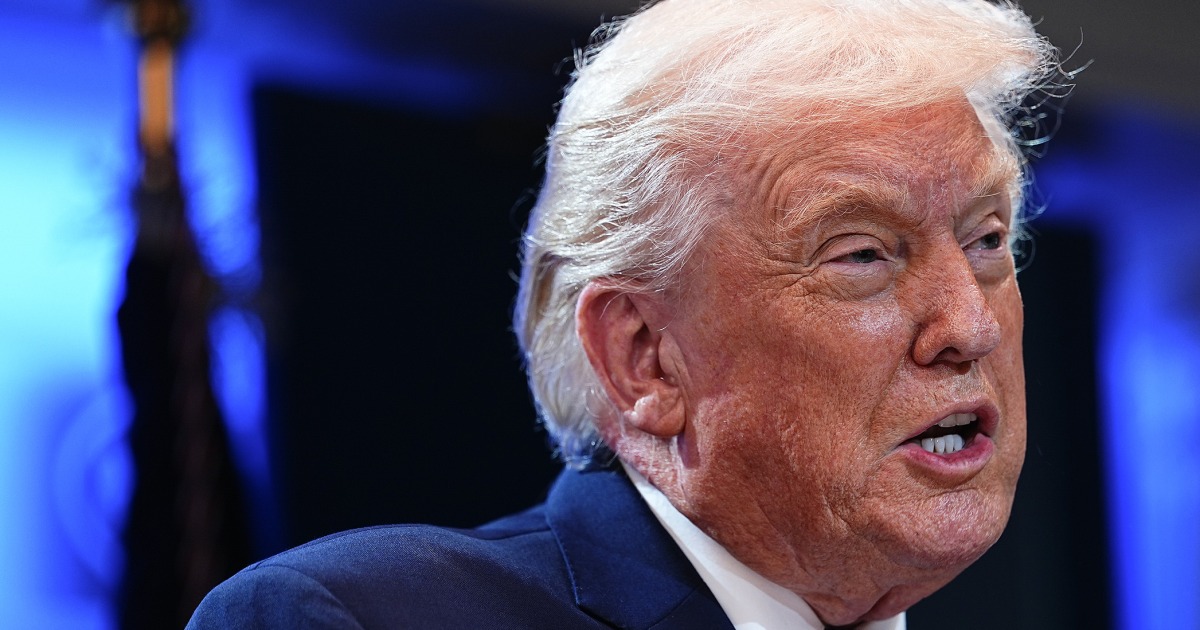
In a Saturday statement, President Donald Trump announced an escalation of his recently unveiled global tariff from 10% to 15%, following a Supreme Court ruling that invalidated most of his previously imposed tariffs under the International Emergency Economic Powers Act (IEEPA). The high court's decision, delivered on Friday in a 6-3 vote, found Trump's aggressive use of tariffs on international imports to be outside the scope of the 1977 law.
The revised tariff will result in a significant decrease for most key trading partners, with some maintaining the existing 15% rate previously imposed on imports from Japan and the European Union (EU). Tariffs for America's other major trading partners, such as Mexico, Canada, and China, are expected to experience a substantial reduction. India, Brazil, and other significant trading nations will also likely see reductions in their duties.
Trump is implementing this new global tariff under Section 122 of the 1974 Trade Act, which differs from the legislation contested in the recent court ruling. The 1974 law grants the president authority to impose import taxes for national security reasons.
The United States President has announced plans to instate a "temporary import surcharge" of up to 15% in response to substantial and significant balance of payments deficits or to prevent an imminent and significant depreciation of the U.S. dollar in foreign exchange markets, according to newly proposed legislation. The tariffs, under this law, could persist for up to 150 days before requiring congressional action for extension. However, there is ambiguity as to whether the administration has the authority to immediately reinstate the tariffs following the 150-day period via another executive order.
Concurrently, U.S. Trade Representative Jamieson Greer announced that Section 301 investigations will be expedited on "most major trading partners." These investigations would enable the administration to impose tariffs under a different provision of the 1974 law if it deems that U.S. rights are being violated under any trade agreement or if it finds such agreements to be unjustifiable and detrimental to U.S. commerce.
Source: Read Original Article